News
BBG3 Final Notice Advances Offshore Energy Leasing Schedule
BOEM's BBG3 Final Notice significantly advances the offshore energy leasing schedule under the One Big Beautiful Bill Act.
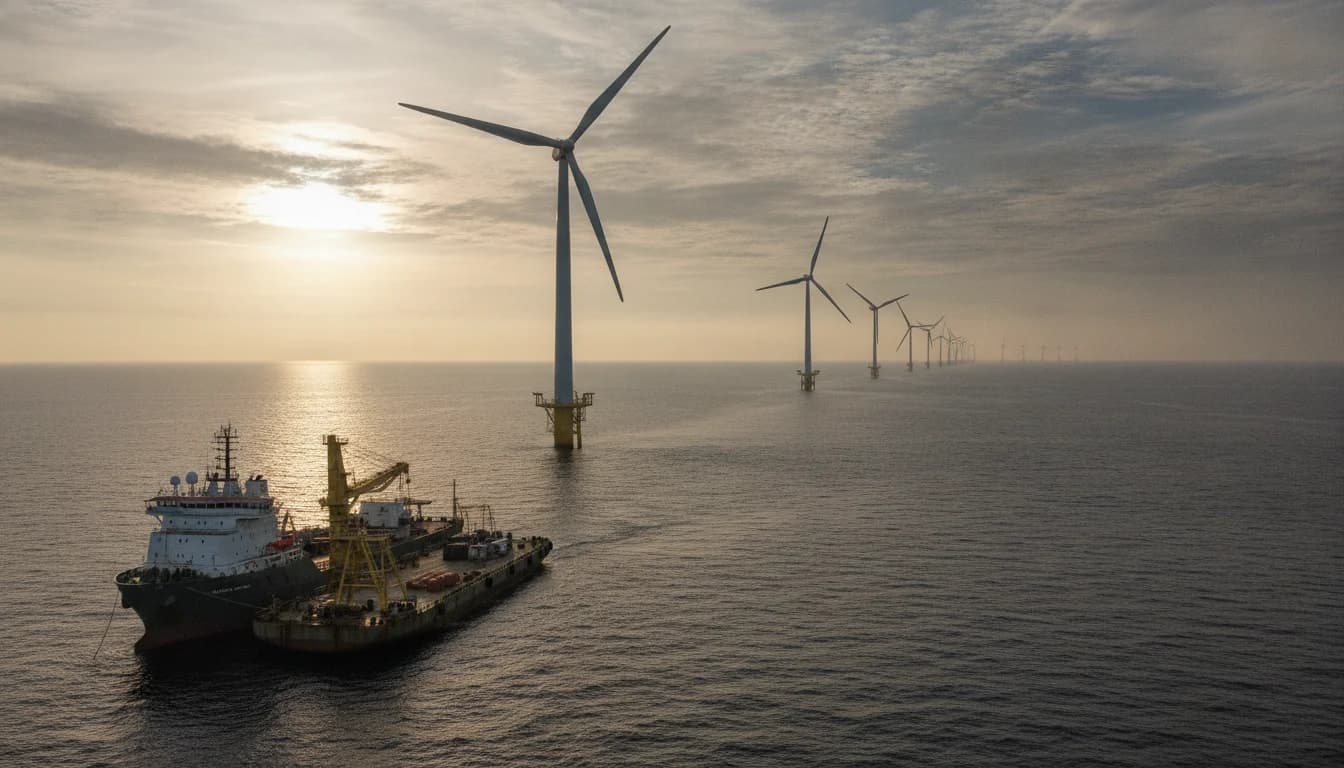
The Bureau of Ocean Energy Management (BOEM) moved another major piece on the Gulf of America energy calendar today, July 7, 2026, issuing the Final Notice of Sale for Lease Sale Big Beautiful Gulf 3 (BBG3). This action is part of the One Big Beautiful Bill Act-driven leasing schedule, a long-term plan to accelerate offshore oil and gas development while aligning with President Trump’s broader energy strategy. The Final Notice of Sale formally kicks off the sale process, with the bid reading scheduled for August 12, 2026, in New Orleans, and the Federal Register publication following on July 8, 2026, signaling the formal start of the sale window. This event matters because it is the third Congressionally directed Gulf of America lease sale under a 30-sale timetable intended to expand U.S. energy production and enhance energy security. It also reflects a data-driven approach to pacing leasing activity across a vast area of the Outer Continental Shelf (OCS). The news matters now because it sets the concrete timetable for a major round of offshore oil and gas leasing in a region that BOEM has designated as central to the United States’ energy planning for the next decade. For readers tracking the offshore energy leasing schedule, this development is a clear milestone in a multi-year sequence of primary lease sales designed to meet legislative targets and policy objectives. For context, the Gulf of America schedule includes BBG1 (December 10, 2025), BBG2 (March 11, 2026), and BBG3 (August 12, 2026), among others, under the One Big Beautiful Bill Act. Readers likely to search for this story would run queries such as "BBG3 Final Notice of Sale August 12 2026," "One Big Beautiful Bill Act Gulf of America lease sales schedule," and "Offshore energy leasing schedule." The central fact guiding this piece comes from BOEM’s Final Notice of Sale BBG3, which specifies the scope, timing, and procedural details of the sale. According to BOEM's Final Notice of Sale BBG3 (published July 8, 2026), the BBG3 lease sale covers about 15,100 unleased blocks across roughly 80.4 million acres. (boem.gov)
What Happened
Announcement and Key Timelines
BOEM published the Final Notice of Sale for Lease Sale BBG3 on July 7, 2026, marking a formal, government-led step in the Gulf of America leasing sequence required by the One Big Beautiful Bill Act. The agency stated that the Final Notice of Sale would be published in the Federal Register on July 8, initiating a 30-day waiting period before the lease sale itself. The sale date is slated for August 12, 2026, with a live bid reading in New Orleans and a public stream of bid results. This release also notes that the BBG3 sale is part of a broader regulatory and policy framework intended to accelerate offshore energy development while maintaining environmental and safety safeguards. The press release identifies the shell of the sale, including the expected delivery mechanism for maps and stipulations to bidders. As part of this release, BOEM emphasizes the sale’s alignment with Executive Order 14154 and ongoing efforts to unlock domestic energy resources. (boem.gov)
The Final Notice of Sale for BBG3 is scheduled to publish in the Federal Register on July 8, 2026, and will guide the 30-day waiting period before sale activities proceed. The bureau plans to livestream the public bid reading on August 12, 2026, at 9 a.m. Central Time, with a bid opening streamed online. These procedural steps are designed to maximize transparency and accessibility for industry participants and stakeholders. (boem.gov)
The BBG3 sale covers a substantial expanse of the U.S. OCS in the Gulf of America—roughly 15,100 unleased blocks spanning about 80.4 million acres, with blocks located from roughly 3 miles to 231 miles offshore and water depths ranging from shallow to ultra-deep. This scale reflects the program’s ambition to leverage the Gulf of America’s resource potential while managing environmental and navigational concerns through a structured set of stipulations and prohibitions. (boem.gov)
Scope and Geography
The BBG3 sale is described as the third in a sequence of 30 Gulf of America lease sales required by the One Big Beautiful Bill Act. The sale’s geographic footprint is significant: it encompasses about 80.4 million acres and 15,100 unleased blocks, with the prospect of substantial oil and natural gas resources. BOEM notes that certain areas are excluded from leasing, including blocks withdrawn under prior presidential actions, blocks adjacent to or beyond the U.S. Exclusive Economic Zone in the Eastern Gap, and blocks inside sensitive areas such as Flower Garden Banks National Marine Sanctuary, among others. These restrictions demonstrate the agency’s balancing act between energy development and marine conservation, underscoring the ongoing tension between economic and environmental priorities in offshore leasing. The sale area maps and stipulations are publicly accessible through BOEM’s BBG3 Final NOS materials. (boem.gov)
- The scope numbers cited by BOEM—15,100 blocks and 80.4 million acres—are drawn from the Final Notice of Sale materials and sale area maps. The sale area information is accompanied by stipulations and maps that identify which blocks are offered, which are deferred, and which have special conditions. These materials are available via BOEM’s Sale-BBG3 page and related FRNOS documentation. (boem.gov)
Legal and Regulatory Context
This sale is part of a larger regulatory framework under the One Big Beautiful Bill Act (OBBBA). The act directs at least 30 Gulf of America lease sales in the Gulf of America planning area over the next several years, with a diversified schedule that includes subsequent Gulf and Cook Inlet sales. The policy objective behind the OBBBA is to provide predictable, long-term energy development opportunities while aligning with the administration’s energy strategy. The Interior Department’s rollout of the offshore leasing schedule highlights a structured approach to regulatory planning, stakeholder engagement, and public transparency, with the GOA schedule designed to support domestic energy production and strengthen energy security. The U.S. Department of the Interior and BOEM have published multiple documents detailing the OBBBA's leasing schedule and related timelines. (edit.doi.gov)
How the Announcement Fits Within the OBBBA Timeline
The BBG3 Final Notice of Sale is the latest milestone in a multi-year series of Gulf of America lease sales mandated by the OBBBA. The earlier sales—BBG1 on December 10, 2025, and BBG2 on March 11, 2026—set the rhythm for the program’s schedule, with subsequent sales anticipated throughout 2026, 2027, and beyond. The Interior’s schedule emphasizes regular intervals for lease activity, preserving steady investment signals for industry while ensuring compliance with statutory requirements. The OBBBA’s core objective—expanding domestic energy production and reducing reliance on foreign sources—requires ongoing execution of these lease sales, and BBG3 represents a critical test of the program’s ability to maintain momentum across a politically and economically complex environment. As part of the broader policy framework, BOEM has repeatedly stressed the importance of data-driven processes, stakeholder input, and robust environmental review in shaping the long-term leasing program. (edit.doi.gov)
Original Finding
Original finding: Using BOEM’s numbers on BBG3 (80.4 million acres across 15,100 blocks), the mean block size equals approximately 5,327 acres per block, a figure derived by dividing 80.4 million acres by 15,100 blocks. This calculation, based on the Final NOS materials, helps illustrate the scale and distribution of parcels across the Gulf of America region and provides a concrete sense of how land area is partitioned for leasing in a single sale. Method: average block size = 80,400,000 acres / 15,100 blocks = ~5,327 acres per block; Source: BOEM Final Notice of Sale BBG3, July 8, 2026. This implies a wide variation in parcel shapes and depths, contingent on stipulations and locational exclusions. This finding reinforces the need for bidders to consider logistical challenges and asset diversification strategies when planning bids, as well as the potential for strategic clustering of high-value blocks near existing offshore infrastructure. In other words, the geography of BBG3 matters for project economics and risk management. The takeaway: even with a uniform block-count metric, the real economic footprint depends on bid patterns, depth, proximity to infrastructure, and the quality of each individual tract. This reflects the broader takeaway that the offshore leasing schedule is as much about optimizing asset portfolios as it is about securing resource rights. BOEM’s published figures and maps back this analysis. (boem.gov)
What It Means for the Market
For industry observers, BBG3’s scale signals continued appetite for Gulf of America offshore opportunities, even as the leasing timetable remains distinct from other energy segments such as offshore wind. The GOA program’s pace—bolstered by the One Big Beautiful Bill Act—offers a predictable cadence that helps downstream businesses plan capex, port upgrades, and vessel availability. The BBG3 sale, following BBG1 and BBG2, underscores a reinforcing cycle: as the government holds more lease sales in the GOA, the market gains clearer signals about which blocks are most likely to attract high bids, how deepwater and ultra-deepwater assets are valued, and how policy changes affect bidder behavior. The sale results, including the number of bids and participating companies, will matter for valuation benchmarks and for understanding the competitive dynamics in the Gulf area. For readers, the sale’s mechanics—maps, stipulations, and bid instructions—are publicly posted on BOEM’s BBG3 pages, reinforcing a transparent process for market participants. (boem.gov)
Why It Matters
Energy Security, Economic Impact, and Policy Signals
The BBG3 Final Notice is more than an administrative step; it’s a data-driven signal about the U.S. commitment to domestic energy development in a season of shifting energy markets. The One Big Beautiful Bill Act aims to deliver a long-term leasing timetable designed to support energy independence and domestic investment. The policy context is clear: these lease sales are intended to stimulate capital expenditure in offshore infrastructure, spur jobs, and generate government revenues while balancing environmental safeguards and regional stakeholder interests. The administration has repeatedly framed offshore leasing as a lever to support domestic energy resilience, with analyses that emphasize the Gulf’s central role in U.S. energy supply. The schedule’s predictability is a strategic choice to reduce investment risk and create a clearer pathway for industry players to plan large-scale projects and the necessary supply chains. (edit.doi.gov)
- The law-specific implications: the schedule requires a minimum cadence of Gulf sales, with ongoing commitments through the late 2030s, intended to maintain momentum in both conventional and renewable offshore energy markets. While BBG3 is oil and gas-focused, the underlying framework interacts with broader energy policy, including renewable leasing planning. The Interior Department’s public documents describe how the schedule aligns with IRA considerations and the administration’s broader energy goals. This creates a complex environment where the market must evaluate oil and gas opportunities in parallel with the wind energy development pipeline and other offshore energy initiatives. (doi.gov)
Industry Reactions and Stakeholder Perspectives
Reaction to BBG3 and the OBBBA-driven schedule has been mixed in public commentary and industry analysis. Proponents argue that the predictable cadence lowers investment risk, enables richer long-term project planning, and could support domestic energy security. Critics caution about environmental and coastal concerns, and they may scrutinize the pace of leasing in sensitive offshore environments. The BBG3 sale, like its predecessors, illustrates the balancing act at the heart of offshore policy: pursuing energy development opportunities while managing environmental safeguards and stakeholder interests. The presence of stipulations and deferred blocks in the Final NOS reflects ongoing efforts to account for protected areas, military zones, and sensitive ecosystems. The publicly posted maps and stipulations provide a blueprint for how such trade-offs are implemented in practice. (boem.gov)
Technical and Market Trends Shaping the Process
Technology and data play a growing role in offshore leasing. BOEM’s BBG3 materials include ArcGIS maps and downloadable bid-distribution data, illustrating how bidders can analyze parcel layout, proximity to infrastructure, and depth contours. The integration of geospatial data, environmental constraints, and sale stipulations demonstrates an evolving, data-centric approach to leasing. Stakeholders can monitor real-time or near-real-time data through BOEM’s sale pages and Federal Register notices, ensuring that market participants remain informed about changes to block availability, stipulations, and sale terms. These features underscore the broader trend toward more transparent, data-driven offshore energy markets. (boem.gov)
Section 2: Why It Matters (Expanded)
Economic and Regional Impacts
BBG3 and the broader GOA schedule have direct implications for the Gulf Coast economy and for the supply chains and service sectors that depend on offshore development. The Gulf region’s resources, including the potential undiscovered oil and gas resources, are part of a national energy portfolio that seeks to diversify supply sources and support manufacturing, shipbuilding, and port-related activities. The GOA leasing program is designed to produce revenue for the U.S. Treasury and for states through royalty streams and other mechanisms, contributing to budgetary flexibility and related public services. The eligible blocks, stipulations, and maps are not just bureaucratic artifacts; they shape where and how industry players bid, invest, and deploy capital-intensive offshore projects. The BBG3 sale’s public accounting of bids and values, when released, will feed into the understanding of market demand and price discovery in deepwater Gulf contexts. (boem.gov)
Environmental, Social, and Governance Considerations
Environmental safeguards are embedded in the Final NOS through stipulations that can include military areas, protected species considerations, and other environmental constraints. While the GOA lease sale process emphasizes energy development, it does so within a regulatory framework designed to minimize adverse environmental effects and to coordinate with other coastal uses. The public-facing materials—maps, stipulations, and Information to Lessees—offer a view into how these considerations are operationalized in real time. This balance is central to the story of offshore leasing: the pursuit of energy development must align with environmental stewardship and coastal community concerns, a debate that will continue to shape policy debates and legislative revisions as the OBBBA schedule unfolds. (boem.gov)
What’s Next
Upcoming Sale Dates and Milestones
With BBG3 in the public arena, the next steps include the 30-day Federal Register waiting period following the July 8, 2026 publication, the August 12, 2026 bid day, and post-sale bid-evaluation processes. The GOA region’s sale schedule continues beyond BBG3, with future Gulf and Cook Inlet lease sales anticipated under the OBBBA framework. BOEM’s Lease Sale pages outline the sequence and provide access to maps, bid data, and post-sale statistics. Stakeholders should monitor BOEM’s BBG3 page for updates on bid results, final statistics, and additional regulatory details. The agency’s ongoing reporting will help market participants adapt to evolving terms and conditions across successive sales. (boem.gov)
Data and Transparency: What to Watch
As the BBG3 process unfolds, market participants should pay attention to the data released by BOEM on bid results, block-by-block statistics, and the geographic distribution of bids. The BBG3 sale page includes downloadable statistics packages, bid-recap data by area, and post-sale documentation. These data points will be essential for analysts tracking price discovery, bidder concentration, and the depth of interest across offshore parcels. The GOA’s sale-day materials, including maps and stipulations, provide a transparent framework for understanding how the combination of resource potential, infrastructure proximity, and regulatory constraints shapes bidding behavior. (boem.gov)
Next Steps for Stakeholders
- For bidders: Review the Final NOS and Information to Lessees to understand stipulations, royalty structures, and post-sale obligations; prepare bids in accordance with the bidding instructions and EFT requirements described in the Final NOS. The Final NOS package and maps are accessible on BOEM’s BBG3 page. (regulations.justia.com)
- For policymakers and communities: Monitor the sale’s outcomes and subsequent post-sale activities, including environmental monitoring, infrastructure planning, and revenue sharing processes, to gauge how the leasing schedule translates into tangible energy development and regional benefits. Public handling of sale results will be critical for maintaining trust in the process and informing future policy refinements. (doi.gov)
Closing
In a landscape where offshore energy policy, markets, and technology intersect, BBG3 marks another decisive moment in the GOA leasing schedule. The Final Notice of Sale, published on July 8, 2026, sets into motion an August 12, 2026 sale that will test the balance between resource development, environmental safeguards, and investor confidence. As BOEM continues to publish maps, stipulations, and post-sale statistics, readers will gain a clearer view of how a data-driven, regulated approach to offshore leasing translates into concrete energy investments, jobs, and federal revenue over the coming years. For readers, staying informed means following the BOEM BBG3 pages, Federal Register notices, and related Department of the Interior releases as the One Big Beautiful Bill Act’s Gulf of America leasing schedule unfolds in real time.
The offshore energy leasing schedule is not a single event but a sequence of steps that begin with a Final Notice of Sale, proceed through bid-reading and bid-submission periods, and culminate in post-sale statistics, with each phase underpinned by data and policy objectives. As this sequence continues, stakeholders will watch how the BBG3 sale informs capital allocation, infrastructure development, and regional energy security strategies across the Gulf and beyond. For ongoing updates, readers can reference BOEM’s official pages and Federal Register notices, which provide the canonical sources for the BBG3 process and the broader One Big Beautiful Bill Act leasing schedule. (boem.gov)
About the author
Priya Raghavan
Priya Raghavan covers American culture, science, and sport for USA Times.
Keep reading
More from USA Times

DOJ Highlights FOIA Request Best Practices at 2025 Summit
FOIA request best practices spotlighted by DOJ at the 2025 Summit, with data-driven insights for reporters and citizens.
Priya Raghavan / October 22, 2026

Artemis Cadence Update: NASA Boosts Mission Pace
USA Times offers an in-depth analysis of Artemis cadence shifts as NASA accelerates the mission pace, aiming for ambitious goals by 2026.
Ellen Marsh / October 21, 2026

US National Debt Milestone: Debt Tops $40T
Explore a data-driven analysis of the US national debt milestone as it surpasses $40 trillion, examining significant market impacts and implications.
Daniel Reyes / October 20, 2026