News
Artemis Cadence Update: NASA Boosts Mission Pace
USA Times offers an in-depth analysis of Artemis cadence shifts as NASA accelerates the mission pace, aiming for ambitious goals by 2026.
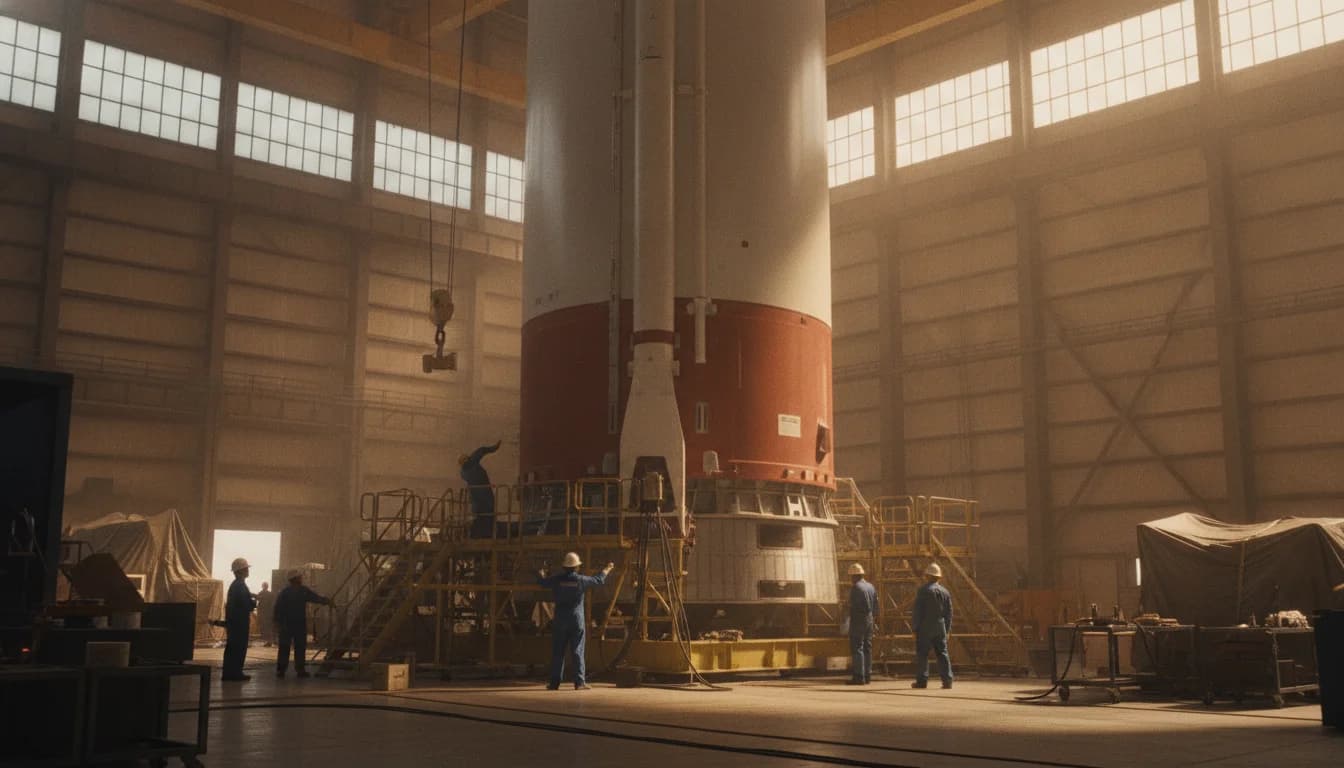
Artemis Cadence Update: NASA Boosts Mission Pace
February 27, 2026, marked a pivotal shift in the Artemis program as NASA announced a deliberate acceleration of its lunar mission cadence. The agency’s news conference and subsequent releases outlined a plan to standardize the Space Launch System configuration, add a new mission in 2027, and establish a minimum of one lunar surface landing per year thereafter. This is a direct response to the long-standing objective of returning American astronauts to the Moon and building a sustainable presence on and around the Moon, with implications for industry partners, suppliers, and the broader space economy. The announcement, delivered at NASA’s Kennedy Space Center and widely covered across national outlets, signals a recalibration of the agency’s timeline, engineering approach, and risk management practices to close gaps that had emerged in prior schedules. As the market and policy environment respond, observers are watching how the cadence change will affect budgeting, contractor workflows, and investor confidence in lunar technologies.
According to NASA’s February 27, 2026 update, the agency is increasing its cadence of Artemis missions, standardizing vehicle configurations, and adding an additional mission in 2027, with a commitment to undertake at least one surface landing every year thereafter. This plan, described by agency officials during the event and in the accompanying documentation, aims to accelerate the Moon program while maintaining safety and technical rigor. The shift also reflects a broader strategy to sustain momentum by aligning lander development, ground systems, and crewed operations under a more repeatable rhythm. The immediate effect is a more predictable sequence for industry partners, who say cadence clarity helps with capacity planning, supply chain management, and long-term staffing. See NASA’s official updates and the agency’s release for full context. (nasa.gov)
Section 1: What Happened
Cadence Expansion
A bold reshaping of the Artemis mission schedule
The core news from the February 27, 2026 briefing is that NASA intends to push Artemis toward a higher tempo. The agency has publicly described a plan to increase the cadence of missions, formalize a standardized launch system configuration, and pursue more frequent lunar operations. The March 3, 2026 NASA update explicitly ties the cadence increase to a broader architectural revision and the addition of at least one more mission in 2027. This is a material change from the prior pacing and is designed to reduce the gap between major milestones, while preserving safety, mission integrity, and the capability to test new hardware against a more ambitious schedule. As part of this effort, Artemis IV and Artemis V are positioned within a synchronized sequence that envisions lunar surface activity on a more regular basis. The specifics include a planned progression from near-term testing in low Earth orbit toward lunar surface operations, with landings anticipated in 2028 and beyond. For readers, this means a clearer line of sight into yearly or near-yearly lunar activity, not just a handful of high-profile missions over a longer span. See NASA’s February 27, 2026 update and the March 3, 2026 architecture briefing for the exact language and timeline. (nasa.gov)
The role of the HLS and SLS standardization
A key component of the cadence shift is the standardization of the Space Launch System (SLS) and related systems. The agency’s public materials indicate that standardizing vehicle configuration will help manage production, testing, and mission-day operations more predictably. The OIG’s February 2026 addendum reinforces this point by noting that NASA’s plan includes “standardizing the Space Launch System vehicle configuration” as part of the updated cadence approach, which is intended to support a regular cadence of lunar landings. This combination—standardized hardware plus an added mission in 2027—underpins the refreshed schedule and the expectation of a repeated, annual cadence going forward. (nasa.gov)
Timeline Details and Key Milestones
Artemis II remains on track for crewed testing
The updated schedule continues to revolve around Artemis II, the crewed lunar flyby planned for early 2026. NASA and its partners reaffirmed that Artemis II remains a central, near-term mission as the program transitions to a higher-pace approach. NASA’s March 3, 2026 update emphasizes that the Artemis II mission is a cornerstone for validating crewed operations and the integrated lunar architecture that will enable downstream activities. This emphasis on Artemis II as a bridge to a faster cadence is echoed in supplementary NASA materials and the agency’s public communications. (nasa.gov)
Artemis III enters a new phase as a test in low Earth orbit
In the wake of the cadence shift, Artemis III has been redefined as a low-Earth-orbit flight test with a broader demonstration intent. The March 3, 2026 NASA update states that Artemis III is planned to serve as a flight test in lower Earth orbit to validate rendezvous, docking, and life-support functions ahead of lunar surface operations. The shift also aligns Artemis III with potential docking with SpaceX’s Starship and Blue Origin’s lander for integrated testing. The OIG addendum confirms the late-February 2026 changes and describes the revised plan of record, including the 2027 Earth-orbit test and the intention to land humans on the Moon in 2028. (nasa.gov)
Artemis IV and Artemis V: landing cadence and beyond
The March 3, 2026 update also outlines Artemis IV as the first sustained lunar landing in early 2028, followed by Artemis V in late 2028 and beyond, with ongoing annual cadence thereafter. The plan explicitly states that standardization efforts will be implemented for Artemis IV, with the expectation that future missions will proceed on a regular yearly cadence. This sequence—LEO tests, transitioning to surface landings, and then a steady annual rhythm—offers industry observers a clearer blueprint for the next several years. The NASA briefing materials and the OIG addendum both confirm these next steps and the intended cadence. (nasa.gov)
Why It Matters (Context, Stakeholders, and Impacts)
Economic and industrial implications for the space sector
A faster Artemis cadence has broad implications for the U.S. aerospace and space services sectors. By committing to more frequent lunar missions, NASA signals a longer runway for lander developers, propulsion systems, avionics, and ground-support services. The OIG document highlights the agency’s move toward a commercial-lander-based model, with competition among SpaceX and Blue Origin helping to drive performance, cost control, and schedule discipline. The shift toward regular lunar landings could translate into higher annual demand for private partners, suppliers, and specialized manufacturing—an effect that observers expect to cascade through the broader space economy, including Gateway operations and related lunar infrastructure development. (oig.nasa.gov)
Risk, governance, and program-management considerations
Experts have long warned that rapid cadence can elevate risk if testing, qualification, and risk mitigation do not keep pace with the schedule. A CSIS analysis of Artemis after the 2026 updates notes that while cadence increases offer strategic value, they also introduce trade-offs in cost, safety margins, and technical readiness for landers and life-support systems. The CSIS assessment emphasizes the need for disciplined reviews, transparent milestones, and robust risk assessment as schedules compress. In the wake of NASA’s cadence shift, industry observers will be watching governance mechanisms, supplier readiness, and the ability to document and manage risk as new milestones come online. (csis.org)
International, scientific, and geopolitical considerations
A more frequent lunar program holds significance beyond pure project timelines. It shapes international partnerships (including ESA, CSA, JAXA, and others involved in Gateway and lunar science), informs public understanding of U.S. leadership in space exploration, and influences the development of lunar science programs and astronaut training pipelines. The AP News coverage of the February 2026 plan notes the broader “rapid cadence” aim resembles Apollo-era pace, albeit with modern safety and technical safeguards, underscoring the program’s role as a bellwether for national space policy and industrial strategy. (apnews.com)
Section 2: Why It Matters — A Deeper Look at the Broader Context
Cadence as a signal to markets and talent
Public statements from NASA and the subsequent analyses highlight cadence as a proxy for mission readiness, industrial capacity, and workforce opportunities. The cadence expansion signals to contractors that capacity commitments will be sustained, enabling long-lead investments in landers, habitats, and life-support systems. It also signals to universities and research institutions where opportunities for lunar science payloads and instrumentation may arise as annual lunar activity grows. The shift is not just a scheduling adjustment; it’s a signal that the Moon program intends to move from episodic, marquee missions toward a continuing, repeatable program with perennial opportunities for collaboration and innovation. (nasa.gov)
Sovereign strategy and long-term planning
With a cadence designed to maintain momentum, NASA aims to anchor a stable, long-term architecture around which the U.S. space program can evolve—eventually supporting sustained lunar presence and, by extension, the Moon-to-Mars roadmap. The March 2026 NASA update emphasizes that standardization and a recurring mission sequence are intended to create a reliable foundation for future exploration. The OIG addendum corroborates the strategic intent to move toward a regular cadence of lunar landings, while also flagging management considerations and the need for ongoing oversight as the program scales. In short, cadence is now a core component of strategic planning for lunar exploration. (nasa.gov)
What experts say about risk and opportunity
Analyses from think tanks and policy-focused outlets suggest that cadence can be a lever for efficiency if managed with strong governance, but it can also magnify risks if technology maturation and supplier readiness do not keep pace. The CSIS piece on Artemis after the 2026 updates highlights the importance of balancing schedule pressures with mission safety and cost controls. Meanwhile, AP News frames the change as a modernization of NASA’s approach, aligning it with lessons from past programs and with contemporary commercial partnerships. Taken together, the policy and industry discourse indicates that cadence is both a strategic asset and a governance challenge. (csis.org)
Section 3: What’s Next
Near-term milestones to watch
- Artemis II mission status and performance: NASA and partners are continuing to execute the crewed lunar flyby in 2026, with ongoing testing, quality assurance, and readiness reviews. This mission remains the anchor for the revised cadence, and updates on its outcomes will shape the feasibility and timing of subsequent steps. See NASA’s March 3, 2026 update for the connection between Artemis II progress and cadence expectations. (nasa.gov)
- Artemis III: low Earth orbit test and partner integration: The redefined Artemis III is viewed as a crucial testbed for in-space operations, docking with landers, and the broader system integration required before a lunar surface landing. The updated plan envisions 2027 as a pivotal year for transitioning from orbital testing to surface capability demonstrations. (nasa.gov)
- 2027: added mission and cadence progression: A new mission in 2027 is part of the updated approach, with the intent to support year-after-year lunar activity thereafter. The combination of an extra mission in 2027 and a sustained annual cadence marks a turning point in the program’s schedule. (nasa.gov)
What to watch for in 2026–2028
- Lander readiness and industrial competition: The updated cadence relies on the readiness of lunar landers from SpaceX and Blue Origin, as well as the testing and integration of Gateway components. The OIG document notes ongoing assessments of lander readiness and the realities of the new contract approach, which emphasizes competition and milestone-based payments. Investors and contractors will be watching milestones tied to lander qualification, integration with Orion and Gateway, and the readiness of life-support and docking systems. (oig.nasa.gov)
- Public announcements and independent assessments: Expect ongoing official updates from NASA as the program transitions to a higher cadence, along with independent reviews from the watchdog community and research think tanks that will assess risk, cost, and schedule implications. The AP News coverage and CSIS analysis provide useful reference points for interpreting how the cadence shift translates into real-world outcomes. (apnews.com)
Closing
The Artemis cadence update announced on February 27, 2026, represents a watershed moment for NASA and the U.S. space program. By standardizing hardware, adding a new mission in 2027, and committing to at least one lunar surface landing per year thereafter, the agency is signaling a durable, repeatable rhythm for exploration that could reshape the space economy and scientific agenda for the next decade. For readers seeking to understand the backbone of this shift, the primary sources from NASA provide the exact language and the official timeline, while watchdog and policy analyses frame the broader implications for risk, cost, and governance. As the program moves from doctrine into execution, USA Times will continue to track cadence milestones, industry responses, and the evolving technical milestones that will determine how quickly the Moon becomes a persistent destination for human exploration.
In the months ahead, stakeholders across government, industry, and academia will be watching how the cadence translates into tangible outcomes: more frequent landings, a more robust industrial base, and a clearer path to sustainable lunar operations. Updates on Artemis II, the 2027 orbital and surface test plans, and the ongoing standardization efforts for SLS and landers will be critical to watch. The acceleration of Artemis cadence not only promises a faster return to the Moon but also a blueprint for how the United States plans to maintain leadership in space exploration as it prepares to send humans to Mars. For ongoing developments, USA Times will provide timely context and analysis as new information becomes public.
Primary sources and context:
- NASA Adds Mission to Artemis Lunar Program, Updates Architecture (February 27, 2026): official announcement of increased cadence, an additional 2027 mission, and annual lunar landings thereafter. See the agency’s release and mission details. Descriptive anchor: NASA’s February 27, 2026 update. (nasa.gov)
- NASA Strengthens Artemis: Adds Mission, Refines Overall Architecture (March 3, 2026): official expansion of the plan, including the 2027 mission and annual cadence, with context on Artemis II, III, IV, and V. Descriptive anchors: the agency’s March 3, 2026 coverage. (nasa.gov)
- ADDENDUM: FEBRUARY 2026 UPDATES TO ARTEMIS CAMPAIGN APPROACH (OIG, March 2026): adds detail on a 2027 mission and at least one annual lunar landing thereafter, with analysis of implications for the HLS program. Descriptive anchor: the OIG addendum. (oig.nasa.gov)
- AP News: NASA revamps Artemis moon landing program (February 27, 2026): independent coverage of the cadence changes and the Apollo-era pacing comparison. Descriptive anchor: AP News article. (apnews.com)
About the author
Ellen Marsh
Ellen Marsh is the national editor at USA Times, directing coverage of Washington, the states, and the federal courts.
Keep reading
More from USA Times

DOJ Highlights FOIA Request Best Practices at 2025 Summit
FOIA request best practices spotlighted by DOJ at the 2025 Summit, with data-driven insights for reporters and citizens.
Priya Raghavan / October 22, 2026

US National Debt Milestone: Debt Tops $40T
Explore a data-driven analysis of the US national debt milestone as it surpasses $40 trillion, examining significant market impacts and implications.
Daniel Reyes / October 20, 2026

Hart-Scott-Rodino Annual Report 2025: 2,006 Transactions
In-depth data-driven analysis of the Hart-Scott-Rodino Annual Report 2025, detailing its 2,006 merger transactions to evaluate market competition.
USA Times / October 19, 2026