News
Trump Unveils National AI Legislative Framework
USA Times provides an in-depth analysis of the National AI Legislative Framework and its far-reaching implications for policy, industry, and innovation.
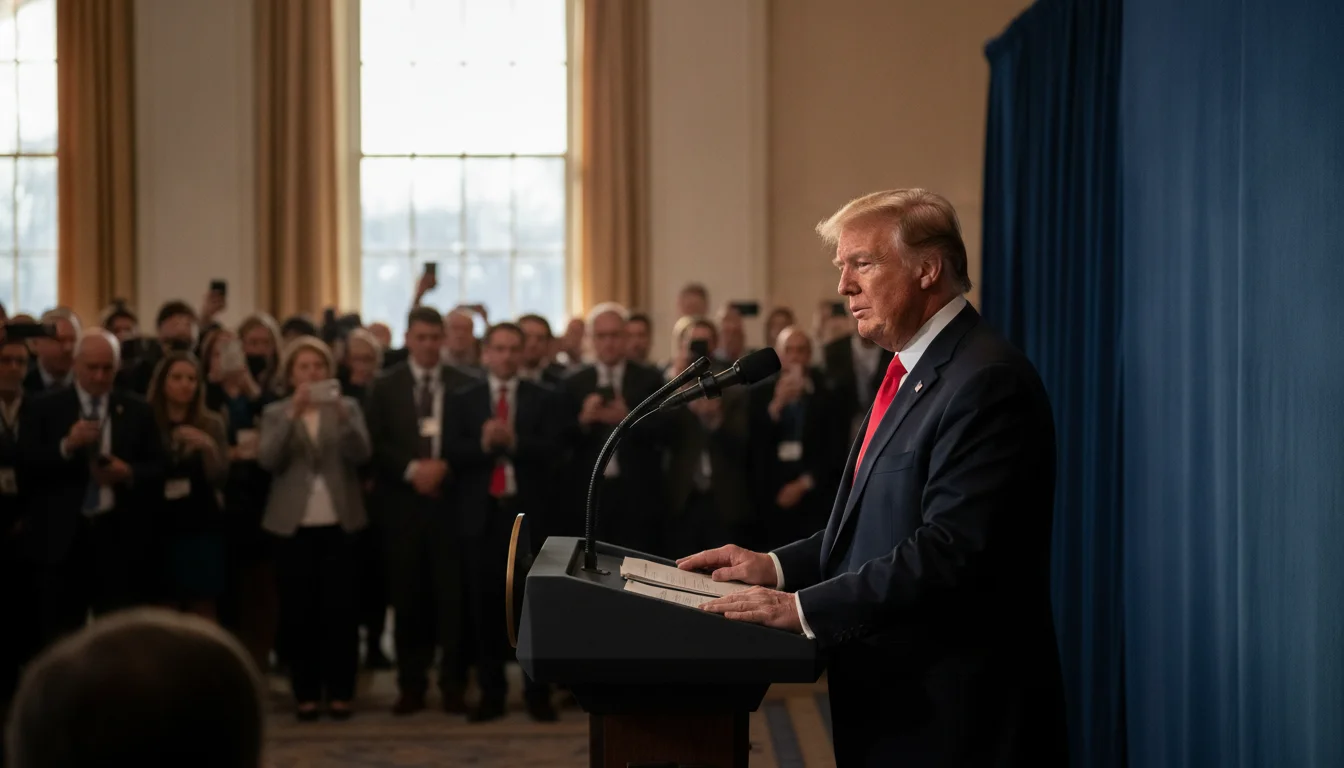
The United States faces a pivotal moment in artificial intelligence policy as the White House on March 20, 2026 unveiled a National AI Legislative Framework intended to shape how Congress writes nationwide AI rules. The White House describes the move as a step toward securing public trust, accelerating innovation, and safeguarding national security, while avoiding a fragmented state-by-state regulatory landscape. The announcement arrives amid a flood of state-level AI proposals and a growing call for a single, cohesive national standard that can keep pace with fast-moving technology. This National AI Legislative Framework is positioned as a starting point for federal legislation, inviting lawmakers to translate high-level recommendations into concrete laws in the months ahead. The White House emphasized that this framework seeks to balance consumer protections with the needs of innovators and workers, acknowledging that the policy design will influence both the pace of AI deployment and the public’s confidence in AI-enabled services. The White House’s statement highlighted six core objectives intended to guide Congress as it considers comprehensive AI legislation. The administration’s aim is to enable AI innovation while protecting children, safeguarding communities, respecting intellectual property, preserving free speech, and preparing the workforce for an AI-driven economy. As this narrative unfolds, observers are watching how the federal push interacts with a sprawling landscape of state and local AI rules, and how quickly Congress can translate these recommendations into binding law. The broader context includes ongoing federal assessments of AI risk management, safety, and governance, as reflected in related White House policy materials and technical frameworks. USA Times counted that, as of April 2025, there were over 1,000 AI-related bills across 48 states and Puerto Rico, averaging roughly 21 bills per jurisdiction, according to the Congressional Research Service. (whitehouse.gov)
What Happened
Announcement and Framework Details On March 20, 2026, the White House publicized a comprehensive National AI Legislative Framework designed to steer Congress as it considers a national standard for AI governance. The administration stated the framework’s purpose is to “enable American industry to innovate and thrive” while ensuring that the public benefits from AI responsibly and transparently. In the release, officials emphasized the need for federal leadership to prevent a patchwork of state rules that could hinder innovation and economic competitiveness. The six core objectives listed by the White House serve as the spine of the proposal, outlining a structured approach to policy that touches on child protection, community resilience, intellectual property, free speech, innovation, and workforce readiness. The White House’s plan argues that a consistent national standard is essential to maintain U.S. leadership in AI and to avoid duplicative or conflicting state rules. The detailed exposition of these objectives appears in the White House release, which also signals that Congress should transform the framework into enacted law in the coming months. For readers seeking the primary narrative from the White House, the official release is the best starting point for understanding the policy directions and the framing of the legislative agenda. The six objectives are: Protecting Children and Empowering Parents; Safeguarding and Strengthening American Communities; Respecting Intellectual Property Rights and Supporting Creators; Preventing Censorship and Protecting Free Speech; Enabling Innovation and Ensuring American AI Dominance; Educating Americans and Developing an AI-Ready Workforce. These six areas are designed to capture a wide range of policy concerns as AI technologies mature. (whitehouse.gov)
Timeline and Accompanying Documents In conjunction with the release, the White House also provided a set of legislative recommendations intended to operationalize the framework’s high-level goals. The companion document, titled National Policy Framework for Artificial Intelligence Legislative Recommendations, lays out concrete policy actions and legislative ideas across seven sections, including a proposed federal preemption framework to supersede conflicting state AI laws. The recommendations document is a four-page PDF that mirrors the structure and priorities outlined in the press release, offering lawmakers a blueprint for drafting laws that address child protection, data and privacy safeguards, IP rights in AI-generated content, and workforce development, among other topics. The timing of these releases—the March 20, 2026 White House communications—signals a coordinated push to move from aspirational policy to legislative text. The White House frames this as a collaborative effort with Congress, inviting feedback and swift action to translate the framework into enforceable rules. For readers who want to see the exact policy recommendations, both the press release and the accompanying PDF provide the primary materials. (whitehouse.gov)
Primary Documents and How to Read Them Two primary documents anchor this coverage: the White House press release detailing the six objectives and policy rationale, and the National Policy Framework for Artificial Intelligence Legislative Recommendations PDF that itemizes the recommended legislative actions. The press release is the formal executive articulation of the policy direction, while the four-page PDF translates that direction into specific legislative proposals, including calls for preemption of state AI laws that impose undue burdens and suggestions for safeguarding children, intellectual property rights, and civil liberties. Journalists and policymakers alike will reference these primary sources as the foundation for any subsequent reporting or debate on US AI governance. For readers, these sources are accessible via the White House’s official site and offer the clearest view of the administration’s intent at the outset of the legislative process. In addition, a broader policy ecosystem is captured in related White House materials and analyses from congressional and independent research sources, which together provide context on how these recommendations fit into ongoing risk management and governance efforts across the federal landscape. (whitehouse.gov)
Section 1: What Happened
Announcement Details and the Six Objectives
The March 20, 2026 White House release frames the National AI Legislative Framework as a strategic answer to the dual pressures of maintaining competitive advantage in AI innovation while protecting the public from AI-enabled risks. The six objectives outline a balanced policy approach:
- Protecting Children and Empowering Parents: The administration calls for Congress to equip parents with tools to manage their children’s digital environments and to implement safeguards around AI platforms likely used by minors.
- Safeguarding and Strengthening American Communities: The policy stresses economic growth and energy considerations, with a focus on ensuring that ratepayers are not overburdened by AI infrastructure and that data centers are planned with reliability in mind, alongside national security considerations.
- Respecting Intellectual Property Rights and Supporting Creators: The framework acknowledges tensions between training AI on copyrighted material, fair use, and the rights of creators, proposing ways to balance innovation with fair compensation and licensing mechanisms.
- Preventing Censorship and Protecting Free Speech: A core assurance is that AI governance should protect free expression while preventing AI systems from silencing political discourse or dissent, including guardrails to uphold First Amendment protections.
- Enabling Innovation and Ensuring American AI Dominance: The administration urges Congress to remove outdated barriers to innovation, accelerate deployment across sectors, and facilitate testing environments to support world-class AI systems.
- Educating Americans and Developing an AI-Ready Workforce: The policy emphasizes workforce development, skills training, and education programs to prepare Americans for jobs in an AI-powered economy.
These objectives, as outlined in the White House release, are designed to establish a national policy foundation that can be translated into enacted legislation. The wording explicitly notes that the framework should be applied uniformly across the United States to avoid a patchwork state-by-state approach that could impede innovation and global competitiveness. The administration’s language signals a proactive stance on federal leadership, with an invitation to Congress to act promptly to turn the framework into law. The press release also emphasizes that the six objectives translate into concrete legislative themes for debate and drafting in the weeks and months ahead. (whitehouse.gov)
Timeline and Associated Policy Documentation
In addition to the press release, the White House’s March 2026 policy package includes the National Policy Framework for Artificial Intelligence Legislative Recommendations (PDF), which distills the six objectives into legislative proposals and clarifies the federal posture on preemption and harmonization of AI governance. The PDF’s structure maps each objective to policy actions and legislative language considerations, providing lawmakers with a direct path to translating the framework into enforceable statutes. The document reinforces the White House’s expectation that Congress will advance a national standard that supersedes conflicting state rules to promote consistent safety, privacy, and innovation norms across the country. The dual release strategy—executive framing paired with concrete legislative recommendations—reflects a deliberate attempt to move beyond aspirational policy talk toward legislative text that can be debated, amended, and enacted. The guidance also aligns with ongoing federal risk-management and governance efforts, including NIST’s AI risk-management work and broader federal AI governance discussions. (whitehouse.gov)
How to Read These Documents and What They Signify
For readers and practitioners, the press release offers a high-level lens on the administration’s priorities and the logic of preferring national consistency over a mosaic of local rules. The accompanying PDF provides a practical, line-by-line view of legislative proposals—useful for policymakers, industry associations, and watchdog groups seeking to understand which policies would be advanced, preempted, or debated. The combination of a top-line executive statement and a formal policy framework is not the same as enacted law, but it sets the stage for significant congressional activity and stakeholder engagement over the next several months. Observers should monitor committee hearings, draft bills, and possible amendments that reflect the six objectives, especially around preemption and child protection, as these topics are the most likely to shape early legislative negotiations. In short, the documents mark a starting line rather than a finish line, with the real work of drafting, testing, and revising taking place in Congress and across federal agencies in the weeks ahead. (whitehouse.gov)
Section 2: Why It Matters
Federal Preemption and State Law Harmonization
One of the framework’s most consequential features is its emphasis on establishing a national standard and the preemption of divergent state AI laws that impose undue burdens. The policy framework explicitly calls for Congress to preempt state AI laws that would fragment national governance, while preserving state authorities over traditional police powers and matters like consumer protections already embedded in state law. This approach seeks to reduce regulatory uncertainty for AI developers and users, which could accelerate adoption but also centralize policy risk in Washington, potentially limiting state-level experimentation. Critics of federal preemption argue that it can stifle regional innovation or fail to account for local nuances, while proponents contend that a unified standard reduces compliance costs and ensures consistent safety and privacy protections across the country. The National Policy Framework’s preemption focus is a litmus test for how aggressively Congress will push for a centralized regime, and how it will balance federal authority with states’ interests. The policy language on preemption explicitly aims to deliver a “minimally burdensome national standard,” a formulation designed to preserve state flexibility in some areas while ensuring uniformity where it matters most for national competitiveness. (whitehouse.gov)
Children’s Safety, Privacy, and Civil Liberties
A major throughline of both the press release and the accompanying recommendations is safeguarding minors and protecting civil liberties in an AI-enabled environment. The documents call for age-appropriate safeguards, privacy protections, and constructive governance around content and data used to train AI systems. They also stress that the government must defend free speech and guard against censorship or political misuse of AI while maintaining robust protections for privacy and civil rights. Stakeholders—ranging from child advocacy groups to tech companies and content creators—will closely watch how these safeguards are translated into law, including whether proposed rules allow for flexible enforcement in rapidly evolving AI contexts and how they interact with existing privacy laws and child-protection regimes. The policy framework’s emphasis on protecting children and safeguarding civil liberties reflects a broader consensus among policymakers that AI governance must be protective without becoming an impediment to legitimate innovation. (whitehouse.gov)
Intellectual Property, Creativity, and Fair Use
The framework recognizes the tension between AI training on copyrighted material and the rights of creators, publishers, and performers. It suggests new licensing models and licensing frameworks to compensate rights holders while enabling AI systems to learn from public data in a lawful, innovative manner. This area is likely to spark intense negotiations between content industries, AI developers, and user communities. The policy recommendations acknowledge that fair use and licensing considerations will require careful judicial interpretation and potential legislative action to establish clear rules for AI-generated content, voice replication, and the use of protected material in training datasets. This is a high-stakes policy area, given how rapidly AI systems have advanced in content creation, media production, and advertising. The policies aim to strike a balance that preserves creators’ rights without unduly hindering AI innovation. (whitehouse.gov)
Innovation, Competition, and National AI Dominance
A central strand of the framework is the aspiration to preserve and strengthen American leadership in AI, both in innovation and in governance. By outlining steps to remove outdated barriers and accelerate AI deployment across industries, the framework positions the United States to maintain a competitive edge in a global technology race. This is not merely a domestic policy exercise; the White House frames AI leadership as a strategic priority with implications for national security and economic vitality. Observers will track how the legislative process translates these ambitions into concrete incentives, standards, and regulatory safeguards that could influence venture investment, research funding, and private-sector strategy. The framework’s emphasis on uniform policy across states, streamlined permitting for AI infrastructure, and accessible testing environments underscores a long-term vision for a national ecosystem that supports scalable AI development while safeguarding public interests. (whitehouse.gov)
Workforce Readiness and Education
Preparing the American workforce for AI-driven change is a persistent theme in federal AI policy discussions, and the National AI Legislative Framework explicitly foregrounds education and workforce development as a core objective. The proposed policy actions include expanding training programs, apprenticeships, and partnerships with educational institutions to ensure workers can participate in and benefit from AI-driven growth. As AI technologies reshape job tasks and required skills, the framework contemplates an agile, skills-based approach to workforce policy—one that aims to reduce friction between AI adoption and labor market transitions. This emphasis on human capital reflects a broader understanding that technological advancement is most effective when accompanied by a robust pipeline of skilled workers who can design, deploy, and manage AI systems across sectors. The policy language suggests funding and programmatic support to uplift workers and include AI literacy in education at multiple levels. (whitehouse.gov)
Industry and Public Sector Reactions
The White House’s National AI Legislative Framework has elicited a spectrum of reactions from industry groups, policymakers, and observers. Some industry advocates welcomed a clear, national standard that could reduce compliance complexity and provide a stable policy horizon for AI investment. Others cautioned that the framework’s preemptive approach could curb experimentation in smaller states or hamper tailored, local AI governance efforts that reflect unique community needs. The broader public conversation has intensified as lawmakers in Congress begin to scrutinize the framework, draft legislative text, and convene hearings to discuss the tradeoffs between innovation and risk mitigation. In parallel, reporting from outlets like Axios and AP News has highlighted how the federal push interacts with a wave of state-level AI bills, underscoring the ongoing tension between uniform federal policy and regional experimentation. This dynamic will likely shape early legislative negotiations and the policy landscape for AI governance in the United States. (axios.com)
Section 3: What’s Next
Congressional Action Timeline
The White House signal is clear: the National AI Legislative Framework is intended to be translated into legislation in the months ahead. The March 2026 release explicitly invites Congress to draft and pass comprehensive AI legislation, with the administration expressing readiness to work with lawmakers to turn the framework into law. The timeline for action will hinge on committee hearings, the introduction of bipartisan bills that align with the six objectives, and the degree to which lawmakers negotiate preemption, child protections, and rights-holder considerations. As with any major policy initiative, the path from framework to statute will involve negotiations, amendments, and potential compromises across party lines and committee jurisdictions. Analysts and stakeholders will be watching closely for early bill introductions, markup schedules, and any cross-cutting alignment with related AI policy initiatives and risk-management standards in federal agencies. (whitehouse.gov)
Next Steps and What to Watch For
Key near-term milestones include: (1) the introduction of one or more bipartisan AI bills that map directly to the framework’s six objectives; (2) committee hearings exploring preemption language, privacy protections, IP rights frameworks, and workforce provisions; (3) the release of amendments or alternative proposals from state and federal lawmakers reflecting stakeholder input; and (4) ongoing interagency coordination through bodies like the National AI Initiative Office and NIST to harmonize risk management and governance standards with new legislation. Observers should watch for developments in the following areas: preemption scope and limitations, safety and security provisions for AI systems used in critical infrastructure, accountability mechanisms for AI developers and operators, and the balance between freedom of expression and safeguards against misuse. The White House has signaled that the legislative process will emphasize a national standard designed to reduce inefficiencies and uncertainties associated with a patchwork regulatory landscape. (whitehouse.gov)
Closing
The emergence of a National AI Legislative Framework marks a notable inflection in the United States’ approach to AI governance. By articulating six concrete objectives and pairing them with legislative recommendations, the administration aims to accelerate policy clarity at a moment when AI technologies are reshaping markets, work, and everyday life. Even as the framework seeks to unify rules across states, the debate over how much federal preemption is appropriate—and which protections are most essential—will define the tenor of AI policy for the foreseeable future. USA Times will continue to monitor congressional activity, executive developments, and industry responses as lawmakers translate the framework into actual laws. Stay tuned for updates on hearings, bill introductions, and the evolution of this framework into binding policy.
As the federal dialogue advances, readers should keep a watchful eye on primary documents—the White House’s official press release and the National Policy Framework for Artificial Intelligence Legislative Recommendations—while also following independent analyses and watchdog reporting to capture how the framework translates into practice, both in government and in the markets that rely on AI technologies. The conversation surrounding AI governance is ongoing and evolving, and informed, data-driven reporting will be essential to understanding its real-world impact on consumers, workers, creators, and businesses across the United States. (whitehouse.gov)
About the author
USA Times
Content writer for USA Times
Keep reading
More from USA Times

DOJ Highlights FOIA Request Best Practices at 2025 Summit
FOIA request best practices spotlighted by DOJ at the 2025 Summit, with data-driven insights for reporters and citizens.
Priya Raghavan / October 22, 2026

Artemis Cadence Update: NASA Boosts Mission Pace
USA Times offers an in-depth analysis of Artemis cadence shifts as NASA accelerates the mission pace, aiming for ambitious goals by 2026.
Ellen Marsh / October 21, 2026

US National Debt Milestone: Debt Tops $40T
Explore a data-driven analysis of the US national debt milestone as it surpasses $40 trillion, examining significant market impacts and implications.
Daniel Reyes / October 20, 2026