News
King County Council OKs $431M Supplemental Budget
The King County Council approved a $431 million supplemental budget on June 23, 2026, aimed at enhancing oversight and funding services in public…
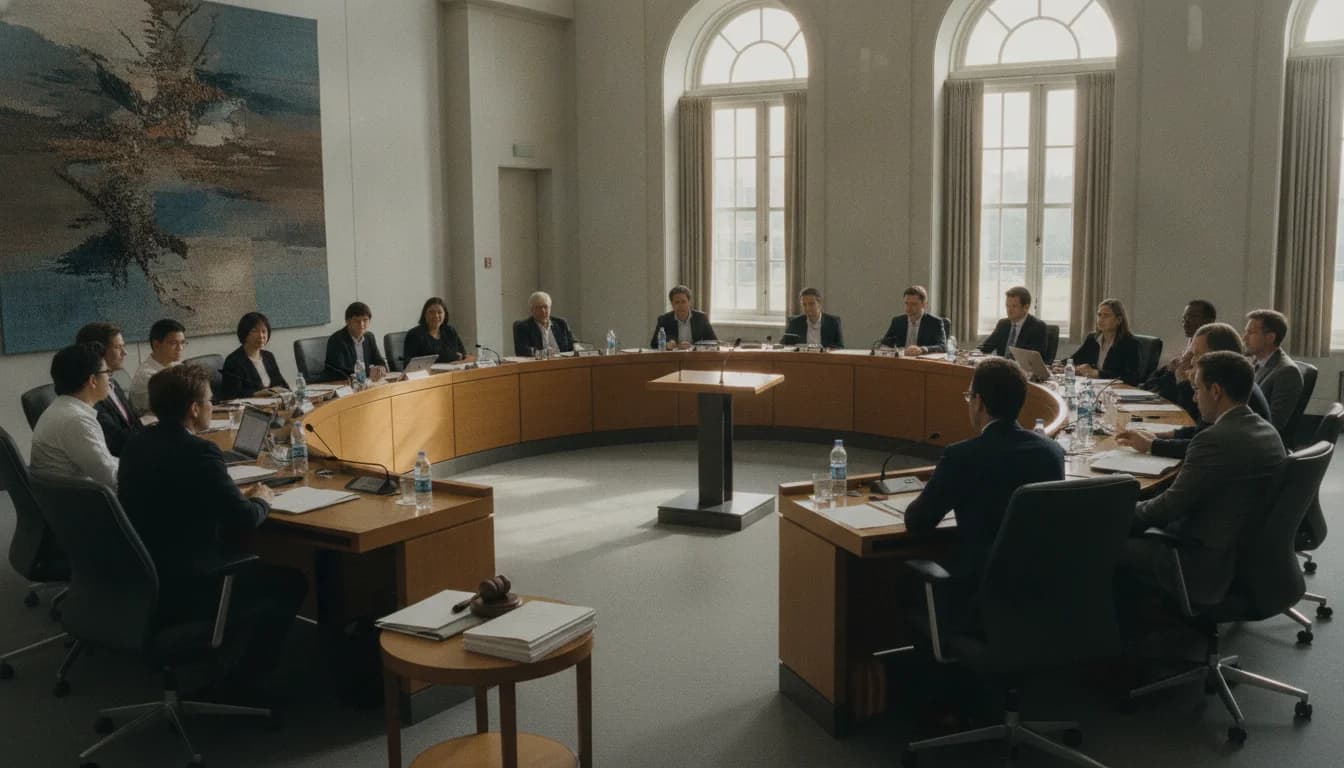
The King County Council approved a $431 million supplemental budget on June 23, 2026, a move designed to strengthen oversight of county programs and to fund a broad slate of services from public safety to housing and social supports. According to King County's budget release on June 23, 2026, King County approved a $431 million supplemental budget. The decision was announced by the County Council in a formal release and followed months of bargaining, amendments, and committee review as part of the 2026-2027 biennial budget process. The event took place in King County, Washington, with enactment details rolling out over the following weeks as the council finalized the package and started implementing its provisions. This development matters because it signals not just a one-time infusion of funds, but a structured push to enhance program oversight, align resources with audit recommendations, and address immediate needs in safety, housing, and essential services, all while maintaining fiscal discipline amid a shifting federal funding landscape. The June 23, 2026 action also comes as the county moves to implement a set of governance improvements and new or expanded programs that rely on technology, data governance, and contract management to translate dollars into results.
What Happened
Budget totals and the mechanics of the supplemental
Overall figures and structure
The ordinance that underpins the supplemental funding totals $431,398,000 when all components are combined, distributed as three net supplemental appropriations: $70,172,000 to various general fund agencies, $147,858,000 to various non-general fund agencies, and $213,368,141 from various capital fund budgets. These numbers are laid out in the ordinance details and associated transmittal materials, reflecting a comprehensive adjustment to the 2026-2027 Biennial Budget Ordinance (Ordinance 20023). The council action, introduced in early 2026 and enacted in July 2026, represents a targeted reallocation and addition of resources rather than a wholesale budget rewrite. The official filing shows the exact line items and crosswalks that connect the 2026-2027 adopted framework to the first Omnibus supplemental. For readers who want the legal text and the crosswalk, the Legislation Detail page provides a complete view of the amendments and attachments. See the ordinance file and related attachments for specifics. King County Legislation Details: 2026-0071 and associated docket materials. (kingcounty.legistar.com)
Key program additions and allocations
The supplemental funding package carves out substantial new resources for internal governance, safety, housing, and human services. The council’s approved additions include:
Internal oversight and governance: about $1.75 million designated for internal oversight, including $600,000 to support the anticipated new Division of Inspector General and a public-facing hotline for reports of suspected fraud, waste, and abuse; $250,000 for the Department of Community and Human Services (DCHS) to hire a consultant to strengthen contract management and fiscal compliance; $400,000 and 1.5 full-time-equivalent positions for the Office of Risk Management to update the ethics code; and $500,000 to support reporting and oversight work tied to housing and investment protections. These measures reflect a clear shift toward stronger accountability and a formalized inspectorate. The June 23, 2026 release details the governance-focused elements, including the Inspector General and contract oversight enhancements. [King County Newsroom: Council approves $431 million supplemental budget] and the related budget materials. (cd.kingcounty.gov)
Law, safety, and well-being: about $773,000 dedicated to law and justice programs, including $150,000 for the Regional Office of Gun Violence to coordinate with local schools on safety, $150,000 to support investigation and resolution of cold cases at the King County Sheriff’s Office, $473,000 to sustain the Survivors First program that diverts domestic-violence survivors from prosecution to supportive services, and additional staffing and oversight provisions. These items illustrate a continuum of public-safety and victims-services investments supported by the supplemental budget. (cd.kingcounty.gov)
Community supports and equity: approximately $190,000 for immigrant and refugee supports, $620,000 for food banks and food-security programs, and a modest but targeted $2 million in rental assistance and related supports to bolster housing stability. The package also includes a contingency fund reserve—$10 million—to offset potential reductions in federal homelessness resources, underscoring the county’s readiness to adapt to evolving funding conditions. These allocations are designed to improve resilience and equity across communities most affected by economic shifts and policy changes. (cd.kingcounty.gov)
Transit and facilities investments: $164 million to King County Metro to begin the process toward purchasing 115 hybrid-electric buses—part of a broader mobility and climate strategy—and $23 million to advance the Pioneer Square Clinic, a health-access project serving low-income residents. The budget also earmarks $6.5 million for critical life-safety capital projects at major county facilities and $5.4 million to advance a hybrid-workplace plan, including office-space adaptations and related occupancy considerations. These items demonstrate how technology and infrastructure investments are being aligned with sustainability, accessibility, and workforce strategies. (cd.kingcounty.gov)
Safety and public-facing services: $25 million for the King County Sheriff’s Office and Office of Emergency Management to support public safety during FIFA World Cup 2026 matches hosted in the region, including additional staffing and multilingual public-safety messaging campaigns; and $2 million for immigrant and refugee-related services and $2 million in supplemental rental assistance for residents in need. The FIFA-related funding is a high-profile example of readiness and resource mobilization in response to a major regional event. (cd.kingcounty.gov)
Operations and labor: the package also contains funds to support labor agreements, personnel, and operational efficiencies, including nearly $4.9 million to fund labor agreements for represented employees and a suite of investments related to the county’s hybrid-work initiatives. The goal is to ensure continuity of services and modernization of government operations in a hybrid-era workplace. (cd.kingcounty.gov)
The instrument of change: the formal ordinance
The legislative vehicle for the supplemental funding is an ordinance that, after committee review and amendments, passed the Metropolitan King County Council on June 23, 2026 and was enacted on July 6, 2026 as Ordinance 20086. The ordinance explicitly calls out the three net supplemental appropriations and links them to the 2026-2027 Biennial Budget Ordinance (Ordinance 20023). The accompanying attachments include crosswalks, financial plans, and department-level details that show how the new funds are to be deployed across programs. For reference, the Legislation Details page lists the enacted date and the precise appropriation figures by fund category. The numbers add up to the $431.4 million total, aligning with the council’s public communications and the executive transmittal materials. See the official ordinance filing and crosswalk documents for granular lines and FTEs. (kingcounty.legistar.com)
Official statements and framing from council leadership
In statements accompanying the budget actions, council leadership framed the supplemental as a necessary, bipartisan response to audit findings and evolving regional needs. Budget Chair Rod Dembowski highlighted the emphasis on oversight, while Vice Chair Jorge L. Barón and Councilmember Steffanie Fain noted the package’s balance between critical services and fiscal responsibility. Balducci’s public remarks likewise stressed district-level investments and accountability, underscoring a shared emphasis on governance, transparency, and equitable service delivery. These quotes and framing are captured in the King County Newsroom materials and related statements. (cd.kingcounty.gov)
Section 1: What Happened - Summary of the Announcement, Timeline, and Key Facts
Date and place of action: The King County Council’s supplemental budget action occurred on June 23, 2026, with the ordinance enacted on July 6, 2026. The event took place in King County, Washington, as part of the 2026-2027 biennial budget cycle. The council’s action was publicly announced via the County’s Newsroom and Legistar portals. (cd.kingcounty.gov)
Primary numbers and fund breakdown: The supplemental budget totals $431,398,000 across general fund, non-general fund, and capital fund appropriations. The three components are $70,172,000 general fund, $147,858,000 non-general fund, and $213,368,141 from capital funds. These figures connect to the amended 2026-2027 Biennial Budget Ordinance (Ordinance 20023) via the 2026-0071 filing and crosswalk attachments. The crosswalk and attachments provide the department-by-department allocations and the entered FTEs for implementing agencies. (kingcounty.legistar.com)
Notable programmatic implications: Among the notable programmatic thrusts are the creation of an Inspector General function and public-facing fraud hotline; strengthened contract management and fiscal compliance in DCHS; an updated ethics framework for risk management; targeted law-and-justice investments; and a substantial transit and homelessness-housing complement. The news release enumerates the specific line items, including the $164 million for Metro’s bus acquisition program, the $25 million to bolster public-safety readiness for FIFA World Cup 2026 matches, and the $6.5 million capital-life-safety investments across major county facilities. (cd.kingcounty.gov)
Governance and oversight emphasis: A core throughline of the package is bolstering oversight of county programs, particularly in the wake of an auditor’s recommendations. The council’s actions include funding for an Inspector General function and a dedicated hotline, as well as enhanced contract and ethics-monitoring capabilities. The official release frames these changes as essential to improving accountability and the effectiveness of program delivery. (cd.kingcounty.gov)
Section 2: Why It Matters
Governance, oversight, and the technology angle
Oversight as a driver for procurement and tech projects: The addition of an Inspector General function and a public-facing fraud hotline is not merely procedural. It changes how technology-enabled contracts — from software licenses to data systems for compliance and reporting — are administered. Stronger internal controls can influence how departments plan, bid, monitor, and audit technology projects, potentially increasing the demand for procurement software, contract management tools, risk dashboards, and cycle-time improvements in the IT supply chain. The budget’s emphasis on governance aligns with audit recommendations and signals a longer-term shift toward more formal IT governance within county operations. The budget release explicitly highlights these governance enhancements as a centerpiece of the supplemental package. (cd.kingcounty.gov)
Public-safety technology and data security: The World Cup readiness funding and the broader public-safety investments imply intensified needs for open data sharing with secure communications, multilingual public messaging, incident monitoring systems, and interoperable communications platforms. While the budget text doesn’t enumerate every technology purchase, the combination of enhanced safety staffing, data-driven oversight, and the discipline of a formal inspectorate creates demand for data governance, secure records management, and analytics capabilities that help agencies track outcomes and ensure program integrity. The release’s explicit references to enhanced dropbox security for voting, and the expanded safety programs, underscore a broader push to combine technology and governance in public services. (cd.kingcounty.gov)
Housing, food security, and digital service delivery: Investments in food-security programs, immigrant and refugee supports, and rental assistance will frequently rely on service-delivery platforms, grant-management systems, and client-support portals. The supplemental budget’s emphasis on oversight and audit-readiness may influence how these digital solutions are procured and evaluated, particularly in areas where risk of misallocation or duplication could arise. The budget text highlights these cross-cutting social investments and the need for robust program controls. (cd.kingcounty.gov)
Economic and market implications for technology vendors and public agencies
Market signals for public-sector IT and services: A $431 million augmentation to the 2026-2027 budget, with explicit allocations for governance, safety, housing, and transit, communicates a sustained commitment to modernization and accountability in King County’s operations. Vendors serving public-sector clients in areas such as contract management, compliance, risk analytics, cybersecurity, and automated reporting can anticipate demand for solutions that help agencies monitor contracts, track performance, manage risk, and demonstrate outcomes to elected officials and the public. The release’s emphasis on ethics codes, inspector-general-readiness, and contract-management improvements aligns with broader trends in public-sector modernization. (cd.kingcounty.gov)
Job and capital investment effects: The plan to hire additional staff (e.g., 1.5 FTEs for risk management, as well as potential new inspector-general roles) implies near-term salary outlays but longer-term productivity gains. In transit and capital projects, procurement of hybrid-electric buses and safety-related capital improvements could spur local supply chains, maintenance, and related services. These shifts affect technology needs, from fleet management software to facilities automation and cyber-hardened infrastructure, and are likely to create opportunities for local vendors, consultants, and service providers. (cd.kingcounty.gov)
Why residents should care
Direct benefits to residents: The supplemental budget’s focus on public safety readiness, emergency management, homelessness services, and food security translates into tangible services for residents. The measures are designed to improve service delivery, accountability, and the county’s capacity to respond to changing conditions, from health care access to disaster preparedness. The county’s messaging emphasizes the alignment of funding with audit findings and the goal of ensuring that programs deliver results for residents. (cd.kingcounty.gov)
Fiscal discipline amid uncertainty: The contingency funds and targeted, program-specific allocations reflect a cautious approach to anticipated revenue volatility at the federal and state levels. By earmarking funds for potential reductions in federal homelessness resources and for governance improvements, the county seeks to maintain program continuity while safeguarding core services. This approach resonates with national debates about how local governments should adapt to shifting funding streams while maintaining transparency and accountability. The budget release outlines these considerations and the rationale behind contingency allocations. (cd.kingcounty.gov)
Section 3: What’s Next
Implementation timeline and next steps
Implementing inspector-general and governance functions: The ordinance includes explicit directives to stand up an Inspector General function within the legislative or executive branches, plus a public-facing hotline. The council’s staff and the executive branch will need to define the IG’s organizational structure, reporting lines, and operating protocols, together with the IT and data governance that will underpin the new oversight mechanisms. Expect early 2027 milestones as recruitment, policy development, and initial audit cycles begin, followed by ongoing performance reporting to the council and the public. The ordinance text and the budget release outline the framework for these steps. (kingcounty.legistar.com)
Contract management improvements and monitoring: As part of the oversight enhancements, DCHS and other departments will likely implement or expand contract-management capabilities, including compliance dashboards, risk assessments, and routine reporting on grant administration. The council’s amendments specifically reference improvements in contract management and fiscal compliance, signaling a multi-quarter implementation trajectory. Agencies have already started aligning their internal procedures with the new requirements, per the budget release. (cd.kingcounty.gov)
Public-safety, transit, and capital projects: The Metro bus acquisition initiative, safety-sector investments during FIFA World Cup 2026, and the capital-life-safety projects are high-profile items with defined implementation windows. Metro’s plan to purchase 115 hybrid-electric buses will proceed through procurement and deployment phases into 2028-2029, with project governance aligned to the new oversight framework. The FIFA-related safety investments will involve staffing, training, and communications infrastructure; project milestones will be monitored via standard capital-project reporting channels. The budget release and the ordinance materials provide the cadence for these milestones. (cd.kingcounty.gov)
Budget hearings and public input: The King County budget process typically includes public hearings, departmental budget requests, and council votes in the fall for the 2026-2027 period and subsequent mid-year adjustments. The 2026-2027 budget process page and the 2026-2027 Proposed Budget Book outline the expected cadence of hearings, amendments, and final adoption. Citizens and stakeholders should stay tuned to the King County Council’s Newsroom for updates on hearings, amendments, and final adoption details. (kingcounty.gov)
Demarcation of milestones and accountability: The final implementation of the IG function and the operation of the fraud hotline will likely be accompanied by interim reporting, including quarterly updates to the council and periodic public disclosures. A range of attachments and crosswalks in the ordinance provide the scaffolding for these accountability measures, and the council’s press materials emphasize ongoing oversight and transparency as ongoing commitments. (kingcounty.legistar.com)
Closing
The June 23, 2026 King County supplemental funding decision represents more than a one-off budget bump. It signals a deliberate shift toward stronger governance, more structured contract oversight, and a comprehensive set of investments aimed at public safety, housing, health access, and transit. By dedicating resources to an Inspector General, modernizing contract-management practices, and funding critical programs across law enforcement, public health, and social services, the county is aligning its fiscal posture with a data-driven, audit-informed approach to service delivery. Residents and technology vendors alike should watch how these governance enhancements translate into improved outcomes, more transparent reporting, and the emergence of new, technology-enabled workflows within county agencies. As King County moves through the implementation phase of Ordinance 20086 and the 2026-2027 budget, updates will come through the County Council’s newsroom, the Legistar docket, and the agencies charged with executing the plan.
To stay updated, follow King County’s official budget and governance pages, including the Council Newsroom and the Legislation Detail pages for ongoing progress, amendments, and implementation milestones. The council’s leadership has framed the package as a balanced, accountable approach to meeting present needs while investing in the county’s long-term capacity to deliver services with greater transparency and efficiency. For readers following technology and market trends in the public sector, the King County supplemental funding 2026 package offers a live case study in how governance design, data oversight, and strategic capital investments intersect to shape public-service delivery in a major metropolitan county. The next few quarters will reveal how these funds translate into improved operations, better public outcomes, and a measurable impact on the region’s technology-enabled public services.
Notes on sourcing and primary documents
King County Newsroom, Council approves $431 million supplemental budget (June 23, 2026). This release details the package’s purpose, governance enhancements, and the specific allocations to oversight, law and justice, housing, food security, and transit. Descriptive anchor: King County Newsroom: Council approves $431 million supplemental budget. https://cd.kingcounty.gov/en/dept/council/governance-leadership/county-council/newsroom/2026/06-23-council-supplemental-budget-release (cd.kingcounty.gov)
King County Legislation Details, File #: 2026-0071 (Ordinance 20086) — the enacted supplemental appropriation with three net components and attachments detailing line items and crosswalks. Descriptive anchor: King County Legislation Details: 2026-0071. https://kingcounty.legistar.com/LegislationDetail.aspx?FullText=1&G=D64F10C7-C196-4013-ABF6-0DA49839DE59&GUID=F3EEC15F-AE21-4805-8052-D73A0F36A4E6&ID=7968498 (kingcounty.legistar.com)
Additional context and quotes from council leadership: Balducci issues statement on passage of supplemental budget (June 23, 2026). https://kingcounty.gov/en/dept/council/governance-leadership/county-council/newsroom/2026/06-23-balducci-budget-statement (kingcounty.gov)
Executive context and related supplemental budget transmissions: Executive Zahilay Transmits $394 Million Supplemental Budget to King County Council (public communications channel). https://content.govdelivery.com/bulletins/gd/WAKING-4114151?wgt_ref=WAKING_WIDGET_11 (content.govdelivery.com)
About the author
USA Times
Content writer for USA Times
Keep reading
More from USA Times
DOJ Highlights FOIA Request Best Practices at 2025 Summit
FOIA request best practices spotlighted by DOJ at the 2025 Summit, with data-driven insights for reporters and citizens.
Priya Raghavan / October 22, 2026

Artemis Cadence Update: NASA Boosts Mission Pace
USA Times offers an in-depth analysis of Artemis cadence shifts as NASA accelerates the mission pace, aiming for ambitious goals by 2026.
Ellen Marsh / October 21, 2026

US National Debt Milestone: Debt Tops $40T
Explore a data-driven analysis of the US national debt milestone as it surpasses $40 trillion, examining significant market impacts and implications.
Daniel Reyes / October 20, 2026