News
US Advances BVLOS Drone Regulation Proposal
The FAA has proposed a rule to establish a performance-based pathway for BVLOS drone operations, aiming to normalize low-altitude activities and expand…
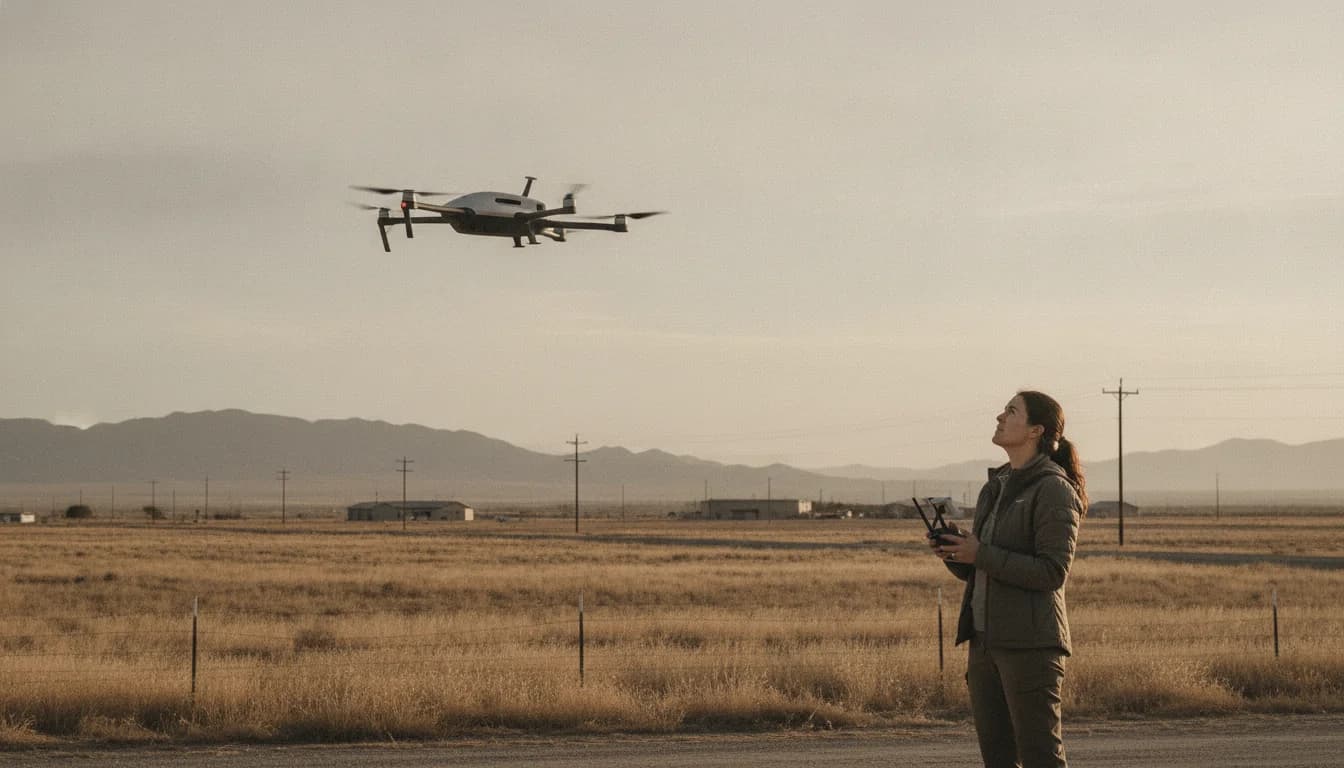
The United States is moving a major rulemaking effort forward in the realm of unmanned aviation. On August 6, 2025, the Federal Aviation Administration publicly signaled its intent to establish a formal, performance-based pathway for Beyond Visual Line of Sight (BVLOS) drone operations. The following day, August 7, 2025, the FAA and the U.S. Department of Transportation published a Notice of Proposed Rulemaking (NPRM) in the Federal Register that would normalize BVLOS activities at low altitudes and expand the regulatory framework to accommodate third-party services, including UAS traffic management (UTM). The announcement marks a critical inflection point for the technology and the market, as it moves BVLOS from a series of waivers and exemptions toward a scalable, rule-based regime. The NPRM aims to reduce uncertainty for operators, manufacturers, and service providers while preserving safety as the North American drone ecosystem expands. This development matters for agriculture, logistics, infrastructure inspection, public safety, and commercial film and media, among other sectors that stand to benefit from BVLOS capabilities. (faa.gov)
In a broader regulatory context, the NPRM aligns with the FAA Reauthorization Act of 2024 and follows policy direction issued by the executive branch to accelerate the integration of UAS into the national airspace system. The proposal would place new requirements on drone operators, aircraft manufacturers, and UAS traffic-management services, while coordinating with the Transportation Security Administration to address security considerations. The collaboration across FAA, TSA, and DOT signals a comprehensive approach to BVLOS that seeks to balance innovation with public safety. The action also situates the United States within a wider global trend toward standardized BVLOS rules, with international peers moving in similar directions to enable scalable drone operations. For readers watching the timeline, the NPRM arrived as part of a sequence of regulatory steps, including an executive directive issued in mid-2025 that anticipated a final rule within a defined horizon. (transportation.gov)
On August 7, 2025, the Federal Register published the BVLOS NPRM, and the administration cited Executive Order 14307, “Unleashing American Drone Dominance,” which instructed the FAA to publish a final BVLOS rule within 240 days where appropriate. The August 7 publication therefore anchors the formal rulemaking timeline, even as the public comment period and potential revisions will shape the final text. This 240-day deadline, embedded in the executive directive, provides a clear milestone for industry observers and policymakers alike. The Federal Register document and the executive order context are publicly accessible and form the basis for the procedural steps that follow. (govinfo.gov)
Section What Happened
Announcement Details
Regulatory purpose and scope
The NPRM’s central objective is to enable safe, routine, and scalable BVLOS operations at low altitudes, complemented by third-party services that support these operations, including UTM. The DOT’s notice highlights that this action is driven by the FAA Reauthorization Act of 2024 and aims to provide a predictable regulatory pathway for a wide range of BVLOS activities—from package delivery and agricultural surveys to civic operations and flight testing. The NPRM frames BVLOS not as an exceptional exemption program but as a systematic, performance-based framework designed to facilitate routine operations in the NAS. The notice also notes that TSA would implement parallel security measures to secure BVLOS activities under the existing civil-aviation structure. For readers, this means a shift from ad hoc approvals toward a holistic ecosystem that connects flight operations, safety oversight, and security. (transportation.gov)
Linkages to standards and ecosystems
In proposing BVLOS operations, the FAA reinforces its long-running approach to safety through a “safety continuum” and by incorporating existing rulemaking structures and aviation standards. The NPRM explicitly contemplates the integration of UTM and other configurations that would enable broader BVLOS use cases while maintaining separation from manned aviation and other UAS. The NPRM text also references coordination with UAS ARC outputs and past rulemaking that has guided BVLOS exemptions and pilot programs. This connection to established rulemaking threads is intended to provide clarity and continuity for operators who already navigate a mosaic of waivers and trial programs. The DOT summary emphasizes that this is a performance-based framework designed to scale with technology, rather than a prescriptive, one-size-fits-all set of prescriptions. (transportation.gov)
Public release timeline
The August 6, 2025 FAA notice and the August 7, 2025 Federal Register publication together establish the public-facing timeline for this rulemaking. The FAA’s BVLOS page documents the August 6, 2025 date and points readers to the NPRM in the Federal Register, highlighting the rulemaking as a major regulatory milestone. The Department of Transportation page reinforces the NPRM’s intent and directs readers to the formal rule text in the Federal Register. Together, these sources show how the U.S. government is coordinating across agencies to publish and justify BVLOS policy in the near term. (faa.gov)
Two primary sources and what they establish
- Federal Register: Normalizing Unmanned Aircraft Systems Beyond Visual Line of Sight Operations NPRM (FR-2025-08-07). This primary document provides the formal, legal notice of the proposed rule and frames the regulatory intent, scope, and procedural steps. It is the canonical source for the NPRM’s language, definitions, and the legislative basis for BVLOS regulation. (govinfo.gov)
- US DOT NPRM page: Normalizing Unmanned Aircraft Systems Beyond Visual Line of Sight Operations. This primary DOT release summarizes the NPRM, calls out the FAA Reauthorization Act of 2024 as the driver, and describes the envisioned pathway for BVLOS and related services. It also links to the Federal Register document for readers seeking the full text. (transportation.gov)
Section Why It Matters
Broader sector impact
Market implications for UAS operators
The BVLOS NPRM represents a potential accelerant for UAS operations across multiple sectors. For operators, the proposed framework could reduce reliance on bespoke waivers and permit more predictable planning horizons, allowing for longer-range deliveries, extended mission profiles, and new business models. The NPRM emphasizes scalability and predictability, which industry observers often cite as critical for attracting investment and building large-scale operations. As the rulemaking progresses, companies with existing BVLOS experiments and waivers will be watching closely for alignment between the NPRM’s performance-based approach and their current operating envelopes. This signals a possible shift from patchwork permissions to a more unified regulatory path that could help U.S. operators compete on the world stage. (transportation.gov)
Security and privacy considerations
The BVLOS proposal includes explicit attention to security and privacy concerns, with TSA coordination to maintain security measures within the civil-aviation structure. The interplay between safety and security, as described in the DOT release, is a central theme—ensuring that the expansion of BVLOS operations does not undermine national security or public trust. Stakeholders spanning government, industry associations, and the public are expected to weigh in on these considerations during the comment period. (transportation.gov)
Global and domestic context
The NPRM is framed within a global context in which many other jurisdictions have introduced BVLOS rules or frameworks to accelerate drone adoption. The Federal Register documentation and the supporting FAA materials point to parallel developments in countries like Canada and members of the European Union, illustrating how the U.S. approach fits into a broader international trend toward standardized BVLOS operations and U-space-like approaches for coordinating airspace sharing. This international perspective underscores why the BVLOS Drone Regulation Proposal is a high-priority, data-driven policy topic for technology firms, insurers, and risk managers alike. (govinfo.gov)
Industry-specific implications
Manufacturing and service providers
For drone manufacturers, BVLOS is a signal to invest in systems that support longer-range flight, robust stealth and reliability, and integration with UTM ecosystems. The NPRM’s emphasis on performance-based standards encourages design choices that emphasize safety, interoperability, and certification pathways, potentially reducing bespoke approval bottlenecks. Service providers that rely on BVLOS-enabled capabilities—such as inspection services, agricultural analytics, and logistics platforms—may benefit from a more predictable regulatory regime that clarifies what is required for scale. The NPRM text and the FAA’s BVLOS materials collectively frame a deployment path that touches both hardware and software layers of the UAS ecosystem. (transportation.gov)
Public safety and infrastructure
Public safety agencies and critical infrastructure operators could gain expanded BVLOS access to support emergency response, disaster monitoring, and critical-data collection with reduced response times. The NPRM’s emphasis on operational safety, coupled with security and privacy considerations, implies a more disciplined approach to BVLOS that could foster broader collaboration among first responders, utilities, and local communities. The FAA’s broader BVLOS materials make clear that the agency views BVLOS as a tool to strengthen resilience while maintaining accountability. (faa.gov)
Section What's Next
Next steps and timeline
Public comment period and potential revisions
With the NPRM published in August 2025, the next major phase is the public comment period, during which stakeholders will submit feedback on proposed requirements, definitions, and process flows. The DOT notice and the FAA’s BVLOS materials call for an open, transparent comment process, which could lead to substantial amendments before a final rule is issued. Industry groups, academic researchers, regional authorities, and potential operators are all expected to weigh in with their perspectives on safety, privacy, and economic impact. The Federal Register text and the DOT page both direct readers to the docket for submitting comments and reviewing the public record, a step that will inform the final content of the BVLOS rule. (transportation.gov)
Final rule and implementation
As noted in the executive directive and the NPRM, the administration seeks a timely final rule, with a 240-day horizon tied to Executive Order 14307’s instruction. The exact timing will depend on the volume and nature of public comments, the agency’s analysis, and any interagency coordination required for TSA and other stakeholders. The 240-day target provides a concrete milestone for industry participants to align development programs, certification plans, and compliance roadmaps, while still allowing the rule to mature through the normal regulatory process. Operators, insurers, and researchers will want to monitor the docket for potential adjustments to performance criteria, risk assessments, and UTM integration standards that could affect on-the-ground operations. (govinfo.gov)
What to watch for in the regulatory docket
- Changes to performance-based criteria for BVLOS flight, including altitude envelopes, weather minimums, and maintenance standards.
- Clarifications around the role of UTM and third-party BVLOS services in ensuring safe separation from manned aviation and other UAS.
- Security and privacy provisions coordinated with the TSA and other security agencies, including data handling, incident reporting, and post-event oversight.
- Local and state considerations, including how communities and municipalities will be engaged in BVLOS planning around airports, corridors, and critical infrastructure.
- International alignment signals, such as mutual recognition or harmonization steps, that could influence cross-border operations and export-ready UAS technologies.
Closing
The BVLOS Drone Regulation Proposal marks a meaningful inflection point for U.S. drone technology, markets, and policy. By articulating a performance-based, scalable regulatory path and coordinating across FAA, DOT, and TSA, the administration aims to lower barriers to BVLOS operations while preserving safety, security, and privacy. As the public comment period unfolds, industry participants should expect a meaningful dialogue about how to operationalize BVLOS at scale in a way that supports innovation, job creation, and safer, more efficient services for the American public. Readers should stay attuned to the Federal Register docket and the FAA’s BVLOS materials for updates, and monitor how the rule evolves as feedback and data inform the final framework. (govinfo.gov)
About the author
USA Times
Content writer for USA Times
Keep reading
More from USA Times

DOJ Highlights FOIA Request Best Practices at 2025 Summit
FOIA request best practices spotlighted by DOJ at the 2025 Summit, with data-driven insights for reporters and citizens.
Priya Raghavan / October 22, 2026

Artemis Cadence Update: NASA Boosts Mission Pace
USA Times offers an in-depth analysis of Artemis cadence shifts as NASA accelerates the mission pace, aiming for ambitious goals by 2026.
Ellen Marsh / October 21, 2026

US National Debt Milestone: Debt Tops $40T
Explore a data-driven analysis of the US national debt milestone as it surpasses $40 trillion, examining significant market impacts and implications.
Daniel Reyes / October 20, 2026