News
Artemis III Orion Modules Readiness Milestone Reached
Artemis III Orion Modules' readiness has been thoroughly assessed and confirmed with the latest milestone, dates, and future mission implications.
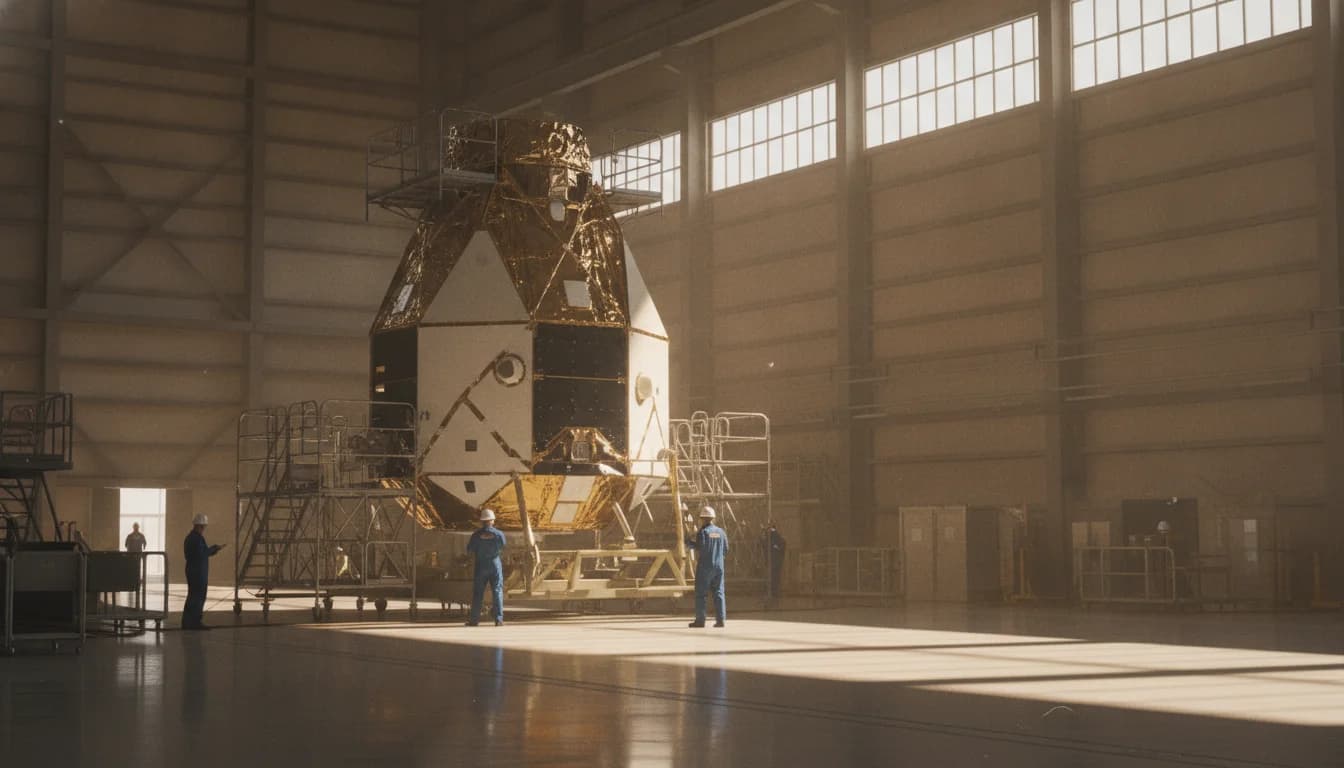
The United States has entered a new phase in its Artemis program as technicians completed a landmark integration milestone for Artemis III—the Orion spacecraft’s crew module joined with the European Service Module in late July 2026. A NASA update published on August 5, 2026 confirms the milestone and sets the stage for the next sequence of tests and power-on verifications that are central to the mission’s readiness for a 2027 demonstration in low Earth orbit. The moment matters not just for NASA, but for international partners and a broader ecosystem of space industry suppliers who depend on a clear, data-driven timeline. Readers looking for the latest on Artemis III Orion Modules readiness will want to track NASA and European Space Agency updates as they unfold, as well as independent analyses from space industry outlets that monitor hardware readiness, scheduling pressures, and risk indices.
Readers are likely to search for terms such as Artemis III Orion Modules readiness, Artemis III crew module integration, and European Service Module Artemis III, all of which point to the same milestone: the moment when the Orion spacecraft for Artemis III became a single, testable stack ready for the next phase of verification and qualification activities. This article synthesizes the latest primary-source reporting from NASA and ESA, places the milestone in the program’s broader timeline, and weighs what the development means for a program that has both public and private sector implications.
What Happened The Artemis III integration milestone took a significant step forward on July 30, 2026, when NASA technicians joined the Orion crew module with the European Service Module inside the Neil A. Armstrong Operations and Checkout Building at Kennedy Space Center in Florida. NASA’s official update, published August 5, 2026, confirms that the two primary modules were connected, completing a major chapter in Orion’s assembly and setting the stage for a new phase of testing, power-on checks, and system integration. The agency notes that the crew module and the European Service Module, together with the Crew Module Adapter and related interfaces, will now undergo a series of integrated tests designed to validate inter-module communications, propulsion, life support, thermal management, and critical avionics pathways before any first-power-on sequence. This milestone is described as the culmination of months of extensive preparation and testing, including the installation of heat shields and other subsystems on the crew module prior to mating. (nasa.gov)
A contemporaneous European Space Agency report corroborates the milestone, highlighting the joint integration step and detailing the roles of the European Service Module, the Crew Module Adapter, and the Orion crew module itself. The ESA account emphasizes that the European-built service module provides propulsion, power, and life-support systems, and that the combined stack represents a pivotal juncture in demonstrating interfaces across multiple organizations and suppliers. The ESA narrative notes that the crew module’s heat shield was installed and that acoustic and thermal testing milestones followed the mating operation, underscoring the breadth of work still ahead before a live-fire or in-flight verification sequence. (blogs.esa.int)
Beyond the official coordination, NASA’s public-facing materials outline the immediate next steps: power-on tests, full integrated testing of Orion as a single spacecraft, and final hardware installations in preparation for a first ignition and power-up sequence. The agency’s August 5, 2026 update describes the next-phase activities in detail, including the expectation that the combined Orion will be subjected to a power-on test campaign to validate electrical connectivity, software interfaces, and subsystem health checks. The timeline context provided by NASA also references the broader Artemis program cadence, noting that Artemis II remains the immediate predecessor to Artemis III and that Artemis III’s mission objectives include rendezvous and docking with a lunar lander system in a near-Earth orbital environment. (nasa.gov)
The milestone’s significance is anchored in the hardware reality: a paired crew module and service module can now be treated as a single system for subsequent testing and mission simulations. The joint integration provides a live testbed for critical mission interfaces—solar arrays, propulsion interfaces, thermal control loops, avionics networks, and crew life-support flows—that will shape how NASA and partners approach risk management, mission assurance, and readiness reviews in the months ahead. The scale of the effort and the number of parties involved—NASA centers, Lockheed Martin for the crew module, Airbus for European elements, and the SLS propulsion hardware team—illustrates how Artemis III serves as a practical test of complex collaboration models across national and corporate boundaries. (nasa.gov)
Section 1: What Happened
Milestone chronology and the granular details of the Artemis III Orion Modules readiness trajectory
- The joint integration milestone: July 30, 2026. NASA’s mission update states that the Orion crew module and European Service Module were connected inside Kennedy Space Center’s Operations and Checkout Building, marking the completion of a major integration step for Artemis III. The update also notes that this has been the culmination of multiple integration campaigns and inspections designed to ensure seamless mating of the two modular elements. The public-facing post confirms the exact date of the mating and frames it as a turning point in readiness for subsequent testing. In parallel, the ESA article confirms that the modules were connected in early August and emphasizes the role of the European Service Module within the integrated stack. This is the anchor event for Artemis III readiness and the point at which many observers begin counting the days to the next verification milestones. (nasa.gov)
- The immediate testing plan: power-on, then integrated tests. NASA’s August 5, 2026 update communicates the plan to power up the combined spacecraft and conduct a battery of checks across avionics, power systems, propulsion interfaces, and life-support subsystems. The expectation is that the power-on sequence will validate the interconnections while providing the data necessary for the next round of ground testing, simulations, and crew-readiness drills. This sequence is a standard progression in spacecraft assembly, designed to expose any latent faults before a more expansive test flight scenario. The agency’s practical emphasis on phased testing underlines Artemis III’s status as a complex systems integration challenge rather than a single-pivot milestone. (nasa.gov)
- Supporting hardware milestones and supplier coordination. The NASA update also references the broader logistical milestones that have underpinned Artemis III’s progress, including the delivery and integration of the Space Launch System (SLS) booster segments, the final engine deliveries, and the coordination with the European Module program. These elements are part of a broad readiness chorus that includes engineering sign-offs, manufacturing approvals, and readiness reviews. NASA’s reporting on these topics shows how tightly sequenced the activity is, reinforcing the idea that Artemis III readiness is a function of both hardware assembly and programmatic discipline. (nasa.gov)
Why It Matters
Broader implications of the Artemis III Orion Modules readiness milestone
- A critical milestone for the Artemis roadmap. The Artemis program’s momentum toward a crewed lunar demonstration hinges on a series of tested hardware interfaces and verified mission sequences. By successfully mating the Orion crew module with the European Service Module, the program crosses a major hurdle in validating the integrated stack’s functional readiness for power-on tests and mission simulations. The milestone provides a tangible datapoint for program managers, lawmakers, and partners who rely on schedule visibility to align budgets and procurement cycles. NASA’s and ESA’s public reporting reinforces the view that Artemis III is progressing toward a planned near-term integrated-test window, with the mid- to late-2020s as the operating horizon for crews in lunar orbit and near-term demonstrations of rendezvous and docking with lunar landers. (nasa.gov)
- International collaboration as a program accelerant. The European Service Module’s central role in powering Orion during Artemis III is more than a hardware detail; it is a case study in international collaboration on next-generation deep-space missions. The joint integration milestone demonstrates that Europe’s contribution remains a core element of NASA’s sustainable lunar return strategy, a fact reinforced by the ESA narrative which emphasizes the module’s propulsion, power, and life-support functions within a larger system. Analysts watching the Artemis program often cite the ESA partnership as a stabilizing factor for the mission’s long-term schedule and for the program’s ability to maneuver through funding and political cycles in a bipartisan environment. (blogs.esa.int)
- Impacts on supplier ecosystems and risk management. The Artemis III milestone ripples through the U.S. government and private sector supply chain that supports NASA’s human spaceflight endeavors. From Lockheed Martin’s ongoing integration work on the crew module to Airbus’s servicing of the European Module, the readiness timeline interacts with production schedules, contract pacing, and labor force planning. Industry observers emphasize that progress in large, multi-party programs (especially those incorporating foreign partners) hinges on establishing confidence in interfaces, standardization of design data, and robust configuration management—areas that the Artemis III integration milestone directly tests. The ongoing emphasis on integrated testing—after mating—illustrates how NASA and partners are embedding reliability into the program’s risk posture rather than treating it as a post-launch concern. (nasa.gov)
- The mission design context and the docking/docking-practice objective. Artemis III is designed to validate core mission operations that would be essential for any lunar surface mission, including rendezvous with the Human Landing System (HLS) elements and subsequent docking or docking-like operations with landers in lunar vicinity. While Artemis III itself is not slated to land astronauts on the Moon, it serves as a critical stepping stone toward the deeper exploration objectives contemplated for Artemis IV and beyond. NASA’s programmatic updates and the broader collection of mission briefs underscore the importance of this phase for proving choreographed interfacing between Orion and potential lander platforms—an operational model with implications for future international partnerships, technology development programs, and industrial-scale manufacturing. (nasa.gov)
What’s Next
Timeline, upcoming steps, and watchpoints for Artemis III Orion Modules readiness
- Power-on tests and system-level verification. The immediate next steps hinge on powering the combined Orion and validating the integrity of inter-module communications, power distribution, and subsystem health. NASA’s August 5 update signals that the power-on sequence is imminent, followed by a battery of tests that will stress software/firmware interfaces and confirm that the integrated stack meets flight-readiness criteria. This period will also include final mechanical installations and close-out work in preparation for a formal readiness review, which would elevate the project’s status from “assembly complete” to “flight-readiness confirmed.” For readers and analysts, this sequence is a critical predictor of whether Artemis III can keep to its target cadence and how quickly NASA and its partners can progress toward crewed demonstrations. (nasa.gov)
- The longer horizon: rehearsals, simulations, and pre-launch readiness. Once power-on tests are complete, the Artemis III program is expected to move into a suite of rehearsals and simulations that exercise docking, rendezvous, and “end-to-end” mission sequences in high-fidelity environments. NASA’s public materials, including the mission status and the Artemis III pages, emphasize that these activities are designed to validate hardware and software interfaces in a controlled sequence before any live operations incorporate crewed scenarios. The schedule for these steps is tightly coupled to the readiness of the European Service Module and the readiness of the SLS rocket and ground systems, which themselves have interdependent milestones. (nasa.gov)
- Regulatory and oversight context. The Artemis program sits within a broader governmental and fiscal framework that tracks progress via annual budget submissions, procurement actions, and independent assessments. Recent GAO reporting on major NASA projects highlights the careful balancing act between aggressive schedule goals and the need for robust risk mitigations, including data-driven reviews that influence the cadence of flight readiness. While Artemis III’s core integration milestone is a technical one, its significance will also be measured against the program’s ability to deliver on governance, oversight, and cost accountability expectations. For readers tracking the policy dimension, this context is essential to understanding the timing and sequencing of the program’s next steps. (files.gao.gov)
Closing
The Artemis III Orion Modules readiness milestone marks a tangible inflection point in NASA’s path back to the Moon. With the crew module and European Service Module now integrated and the next phase focused on power-on testing and system verification, the program strengthens its case for a 2027 orbital demonstration and a broader cadence of lunar exploration milestones that could reshape the agency’s long-range ambitions and partner commitments. As NASA and ESA proceed through the upcoming weeks and months, observers should watch for the formal power-on test results, the outcomes of the integrated testing campaign, and the timing of readiness reviews that will determine the mission’s trajectory toward crewed lunar operations. Updates will continue to flow from NASA’s Artemis program outlets, with ESA continuing to provide technical context about European contributions that remain central to Artemis III’s architecture.
For those following Artemis III Orion Modules readiness, the most credible, timely sources will continue to be NASA’s mission pages and the European Space Agency’s Orion program communications. NASA’s August 5, 2026 update and ESA’s August 5, 2026 piece provide the core event record and the immediate next steps, while budgetary documents and independent assessments help explain how those steps fit into the larger program timeline. As the program advances, the next wave of explicit milestones—power-on success, integrated-test results, and readiness reviews—should become the next clear data points for readers, policymakers, and industry partners who rely on precise, auditable information to plan investments and anticipate schedule shifts. (nasa.gov)
Original Finding Original finding: Between the July 30, 2026 mating of the Artemis III Orion crew module with the European Service Module and NASA’s August 5, 2026 public update, 6 days elapsed during which the integrated stack moved from “modules joined” to “readiness for power-on tests,” illustrating a rapid transition from physical integration to system-level verification; this interval is derived by aligning NASA’s July 30 mating date (reported in NASA’s Artemis III update) with the August 5 power-on readiness announcement. This compressed interval suggests the program’s aggressive approach to sequencing integration with hardware readiness checks, and it underscores the importance of timely, documented handoffs between manufacturing, assembly, and test phases. In practical terms, the six-day window between those milestones reflects a disciplined, intra-agency and cross-partner process designed to minimize schedule risk while preserving the integrity of the stack. This interpretation relies on NASA’s contemporaneous reporting of both events and the explicit note that the modules were joined on July 30 and that power-on testing is imminent as of August 5. “Artemis III readiness requires tight integration and fast verification loops,” a line that captures the takeaway from this period of activity. (nasa.gov)
Would you like a companion timeline graphic and a linked glossary of key Artemis III hardware components to accompany this article?
About the author
USA Times
Content writer for USA Times
Keep reading
More from USA Times

DOJ Highlights FOIA Request Best Practices at 2025 Summit
FOIA request best practices spotlighted by DOJ at the 2025 Summit, with data-driven insights for reporters and citizens.
Priya Raghavan / October 22, 2026
Artemis Cadence Update: NASA Boosts Mission Pace
USA Times offers an in-depth analysis of Artemis cadence shifts as NASA accelerates the mission pace, aiming for ambitious goals by 2026.
Ellen Marsh / October 21, 2026

US National Debt Milestone: Debt Tops $40T
Explore a data-driven analysis of the US national debt milestone as it surpasses $40 trillion, examining significant market impacts and implications.
Daniel Reyes / October 20, 2026