News
Artemis II Launch Schedule: April 1, 2026
Stay updated on the Artemis II launch scheduled for April 1, 2026, and explore its significant impact on the future of NASA's lunar exploration program.
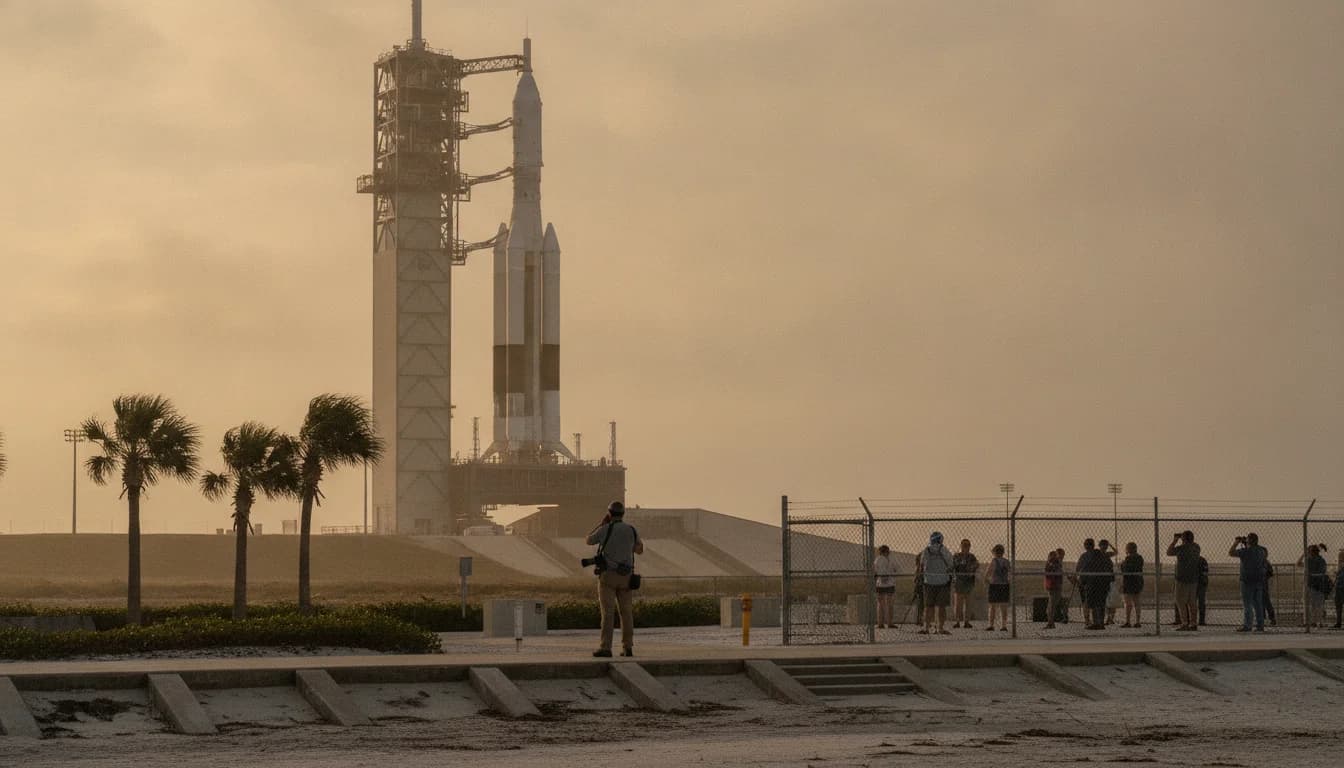
The United States is watching NASA’s Artemis II timeline closely as the agency confirms the crewed lunar flyby schedule for its next step in returning humans to the Moon. NASA has targeted April 1, 2026, for the Artemis II launch from Kennedy Space Center in Florida, with liftoff set for 6:35 p.m. local time, aboard the Space Launch System and Orion spacecraft. The agency’s official launch schedule page lists the timing explicitly, anchoring a broader push to validate life-support systems, deep-space navigation, and propulsion readiness before any crewed landing missions. This is the first crewed Artemis mission since Apollo-era programs, and the date appears to be firm after months of testing and readiness reviews. According to NASA’s Artemis II launch event materials, the official window centers on early 2026, with April 1 highlighted as the earliest practical launch opportunity within that window. (nasa.gov)
NASA’s public communications around Artemis II emphasize the mission’s purpose beyond spectacle: a comprehensive 10-day test flight that will orbit the Moon and validate critical capabilities for future crewed lunar exploration. In late 2025, NASA invited media to attend the launch, signaling a concrete, near-term public milestone for the mission and underscoring the agency’s intent to keep a broad audience informed as the schedule unfolds. The invitation also highlighted that the crew would include three NASA astronauts and one Canadian Space Agency astronaut for the mission profile, reinforcing the international collaboration central to Artemis. This scheduling update arrives amid ongoing reviews of ground systems, vehicle readiness, and mission operations, which NASA officials have described as pivotal to achieving a safe and successful test flight. (nasa.gov)
The following sections detail what happened, why it matters, and what’s next as Artemis II’s launch schedule becomes a focal point for the broader space industry and technology ecosystems that depend on stable, well-communicated milestones.
What Happened
Artemis II’s Timetable and Public Milestones
The central fact driving current coverage is that Artemis II is scheduled to lift off on April 1, 2026, at 6:35 p.m. Eastern from Kennedy Space Center, Florida. The official NASA event page for Artemis II confirms the precise timing and location, presenting the April 1, 2026 date as the designated launch moment within the broader launch window. This is the anchor date around which mission preparations, ground systems work, and media plans are being organized. The same page reiterates that the mission will carry four astronauts on a roughly 10-day flight to perform a lunar flyby and validate systems ahead of future surface landings. (nasa.gov)
The Public Scheduling Narrative and Source of Record
NASA’s public communications have consistently framed Artemis II as a milestone with both technical and programmatic significance. A late-2025 media advisory laid out the expectation of a targeted early-2026 launch, while also signaling that exact timing would be finalized after a series of readiness reviews and a wet dress rehearsal. The press release accompanying the media invitation—an official NASA document—specifically states that the Artemis II test flight is “Targeted to launch in early 2026,” underscoring the agency’s preference for a concrete date while acknowledging the likelihood of schedule evolution based on testing outcomes. This dual message—firm target date with readiness-based flexibility—remains a hallmark of NASA’s approach to Artemis II. (nasa.gov)
The Mission Profile and Key Facts
The mission’s core facts are endorsed by NASA’s own materials: Artemis II will be the first crewed Artemis flight around the Moon, a 10-day mission designed to validate systems and operational concepts for subsequent missions that may include lunar surface activity. The crew includes three NASA astronauts and one CSA astronaut, reflecting broad international collaboration in the Artemis program. The official launch window and mission outline are published on NASA’s Artemis II event page and in mission materials, providing a shared, citable baseline for media and stakeholders. In addition to timing, NASA’s press kits and public briefs outline the contingency planning that accompanies a mission of this complexity, including ground systems readiness, launch vehicle interface considerations, and mission-control readiness. (nasa.gov)
A Critical View on Readiness and Timing
While the April 1, 2026 target is publicly stated, observers should note that the Artemis program has a history of schedule shifts driven by ground systems refurbishment, hydrogen systems testing, and launch readiness reviews. Industry reporting and NASA’s own budget/architecture documentation have highlighted the potential for shifts even within a narrowed window, with readiness reviews and testing outcomes widely seen as the gating items to a firm launch date. For example, NASA’s budgeting and program documents in early 2026 explicitly reference a launch readiness framework with scheduled windows and planned mitigation paths for potential contingencies, including weather, logistics, and technical anomaly handling. (nasa.gov)
A Key Quote From NASA’s Artemis II Communications
“Targeted to launch in early 2026, the Artemis II test flight will send four astronauts on an approximately 10-day journey around the Moon,” the NASA media advisory notes, underscoring both the cadence and the goals of the mission. This framing—targeted timing with a clear, quantifiable mission duration—appears repeatedly in NASA’s communications as the program moves toward a public launch. The emphasis on a 10-day mission is echoed in NASA’s mission materials and press kits, which provide the public-facing details that reporters and industry analysts rely on when drafting their own coverage and analysis. (nasa.gov)
Central fact in context: Artemis II is scheduled to launch on April 1, 2026, at 6:35 p.m. ET from Kennedy Space Center, with a 10-day lunar flyby mission, according to NASA’s Artemis II event page and accompanying materials. This is the anchor fact that shapes the subsequent analysis and reporting. (nasa.gov)
The Technical and Operational Context
Artemis II’s timetable sits at the intersection of propulsion, human spaceflight readiness, and space-systems integration. The Space Launch System rocket, the Orion crew module, and associated ground support equipment must perform in concert during a pressurized countdown and a precise launch window. The mission’s daily activity plan, as published in NASA’s mission agenda, shows a sequence of launch and flight operations designed to maximize safety margins while achieving the key objective of a crewed lunar flyby. NASA’s public-facing mission materials provide a day-by-day outline for the 10-day window, making the plan transparent to reporters and to the public. While dates can shift due to engineering or weather considerations, the April 1, 2026 target remains the single most definitive anchor for the current reporting cycle. (nasa.gov)
Why It Matters
Strategic Significance for NASA’s Artemis Program
Artemis II marks a shift from unmanned or partially instrumented test flights toward a fully crewed demonstration that tests key life-support, communication, navigation, and protection systems in deep-space conditions. The mission is designed to validate the architecture that will enable not only the planned lunar landings but also longer-term ambitions, including sustained human presence on the Moon and readiness for eventual crewed missions to Mars. NASA’s own materials emphasize the program’s trajectory toward a continuous cadence of lunar exploration, leveraging both the Space Launch System and Orion platforms in a way that informs policy, budgeting, and international collaboration. The April 1, 2026 date is thus not only a calendar entry; it is a milestone in a broader strategy to establish a reusable, reliable human exploration system for deep space. (nasa.gov)
Economic and Industry Impacts: How Scheduling Drives Markets
The Artemis program’s schedule has meaningful effects on a broad ecosystem of space suppliers, contractors, and national laboratories. Industry observers have pointed to the cadence of Artemis missions as a driver of demand for propulsion hardware, ground systems upgrades, and mission operations services. Notably, after NASA’s 2025 and early-2026 schedule disclosures, reports highlighted how the program shapes procurement cycles and the timing of contracts for companies involved in SLS production, cryogenic fuel handling, and mission-critical testing. While exact numbers vary by contract and year, the cadence of an April 2026 launch translates into multi-quarter planning horizons for suppliers and substantial activity in the Kennedy Space Center and related supply chains. Analysts have tracked how schedule clarity can reduce risk premiums for suppliers and stabilize production planning on long-lead items like the SLS core stage and Orion’s life-support subsystems. This is a nontrivial driver of technology investment and regional economic activity around spaceports and aerospace hubs. (spacenews.com)
International Collaboration and Policy Context
Artemis II’s crew contingent, including CSA astronaut Jeremy Hansen, underscores the program’s multinational dimension. The Artemis framework has repeatedly framed international partnerships as both scientific and strategic. In addition to the mission’s hardware and flight operations, the collaborative structure influences policy dialogue, export controls, and shared space infrastructure investments. NASA’s public materials and partner pages highlight the CSA’s role and the broader alignment with international partners, signaling how a schedule like the April 1, 2026 launch date can reverberate beyond U.S. soil in policy and funding discussions. (nasa.gov)
Illuminating analysis: The Artemis II schedule not only governs a single launch event; it signals a cadence that affects the broader space economy, including suppliers, international partners, and the readiness posture for the next wave of missions tied to Gateway, lunar surface systems, and beyond. This is why market observers are closely watching NASA’s readiness reviews and the agency’s public communications for any signs of schedule risk or acceleration. (nasa.gov)
Programmatic Lessons and Governance Signals
NASA’s approach to Artemis II, combining public target dates with a documented readiness process, provides a governance template for complex, multi-year programs. A 2026 inspector-general addendum outlines how changes to the Artemis campaign—such as adjusting flight cadence and reconfiguring mission architecture—are being implemented in a controlled, auditable manner. The document notes strategic shifts in 2026 toward standardizing vehicle configurations, expanding mission output, and ensuring at least one lunar surface activity per year going forward. For the reporting community, the implication is clear: public schedule transparency must be paired with explicit program-management accountability to sustain confidence among lawmakers, industry partners, and the scientific community. (oig.nasa.gov)
What’s Next
Timeline, Milestones, and the Path to Launch
With the April 1, 2026 target in sight, NASA’s internal planning now centers on the remaining readiness activities required to finalize the launch date and execute the mission. The first critical milestone is a final readiness review, followed by a wet dress rehearsal—a comprehensive test of launch operations that must pass before the actual lift-off. NASA’s own documentation and press materials outline the sequence of events, including the detailed display of the readiness status to the media and public audiences. The agency has indicated that weather and system readiness will be the principal determinants of the exact launch date within the window, which means that the timetable could shift slightly in the days immediately preceding liftoff, though the April 1 target remains a working baseline. For observers and reporters, the near-term focus is on the results of the wet dress rehearsal and the outcome of the Flight Readiness Review, both of which are central to confirming a firm launch date. (nasa.gov)
What to Watch For: Contingencies and Public Communication
Industry coverage and NASA briefings emphasize that even with a firm target, Artemis II will face contingencies typical of deep-space missions. Hydrogen leaks, ground-system refurbishments, or weather constraints could prompt adjustments that shift the actual launch date within the stated window. Notably, media reporting and trade publications have tracked the potential for schedule variability, highlighting how a single technical issue or weather event can cascade into a multi-day shift in launch timing. This is an important dynamic for market observers—investors, suppliers, and space advocates will be looking for stability signals from NASA as the window approaches, as well as transparent communications if adjustments are necessary. For a deeper read on the kinds of operational uncertainties NASA is balancing, see the agency’s public materials on the Artemis II mission and related readiness documentation. (nasa.gov)
Next Steps for the Media and Public Audiences
Artemis II coverage will continue to hinge on the cadence of official updates from NASA. Journalists can expect forthcoming official briefs around the Wet Dress Rehearsal, the Flight Readiness Review, and subsequent public announcements if the window must be adjusted. NASA’s press kits and media advisory portals maintain a consistently updated feed for reporters, with case studies, mission timelines, and technical specifications that provide the backbone for follow-up stories, explainers, and data-driven analyses. The Artemis II press kit, for instance, contains a suite of technical details, schedule constraints, and planning data that reporters can cite in subsequent articles as the project advances. The ongoing collaboration with international partners means that coverage should also consider CSA statements and related joint communications as the mission progresses. (nasa.gov)
Closing
Artemis II marks a pivotal moment for NASA and for the broader space industry, blending technical rigor with strategic scheduling that informs policy, procurement, and international cooperation. The current schedule points to an April 1, 2026 liftoff from Kennedy Space Center, a date that reporters and analysts will test against the results of readiness reviews and the outcomes of the final rehearsal activities. As the agency advances toward that milestone, the public and industry stakeholders will want to watch how readiness, safety, and governance align with the ambitious goals of Artemis—goals that include regular lunar activity and a sustained presence that could shape human space exploration for decades to come.
Readers seeking the most up-to-date information should follow NASA’s official Artemis II pages and press releases, which provide the primary-source anchors for scheduling and mission details. As the timeline unfolds, USA Times will continue to report with data-driven context, linking to primary sources and offering analysis on how the Artemis II launch schedule fits into the broader arc of technology development, supply-chain dynamics, and international collaboration in space exploration. For ongoing updates and in-depth context, please refer to NASA’s Artemis II event page and the agency’s press communications as the authoritative sources of record. (nasa.gov)
About the author
Daniel Reyes
Daniel Reyes is a senior correspondent at USA Times, reporting on the economy, markets, housing, and American business.
Keep reading
More from USA Times

DOJ Highlights FOIA Request Best Practices at 2025 Summit
FOIA request best practices spotlighted by DOJ at the 2025 Summit, with data-driven insights for reporters and citizens.
Priya Raghavan / October 22, 2026
Artemis Cadence Update: NASA Boosts Mission Pace
USA Times offers an in-depth analysis of Artemis cadence shifts as NASA accelerates the mission pace, aiming for ambitious goals by 2026.
Ellen Marsh / October 21, 2026

US National Debt Milestone: Debt Tops $40T
Explore a data-driven analysis of the US national debt milestone as it surpasses $40 trillion, examining significant market impacts and implications.
Daniel Reyes / October 20, 2026