News
AI Agent Accountability Act Advances in Senate
USA Times reports on the AI Agent Accountability Act, a bipartisan Senate bill to curb rogue AI agents and assign liability.
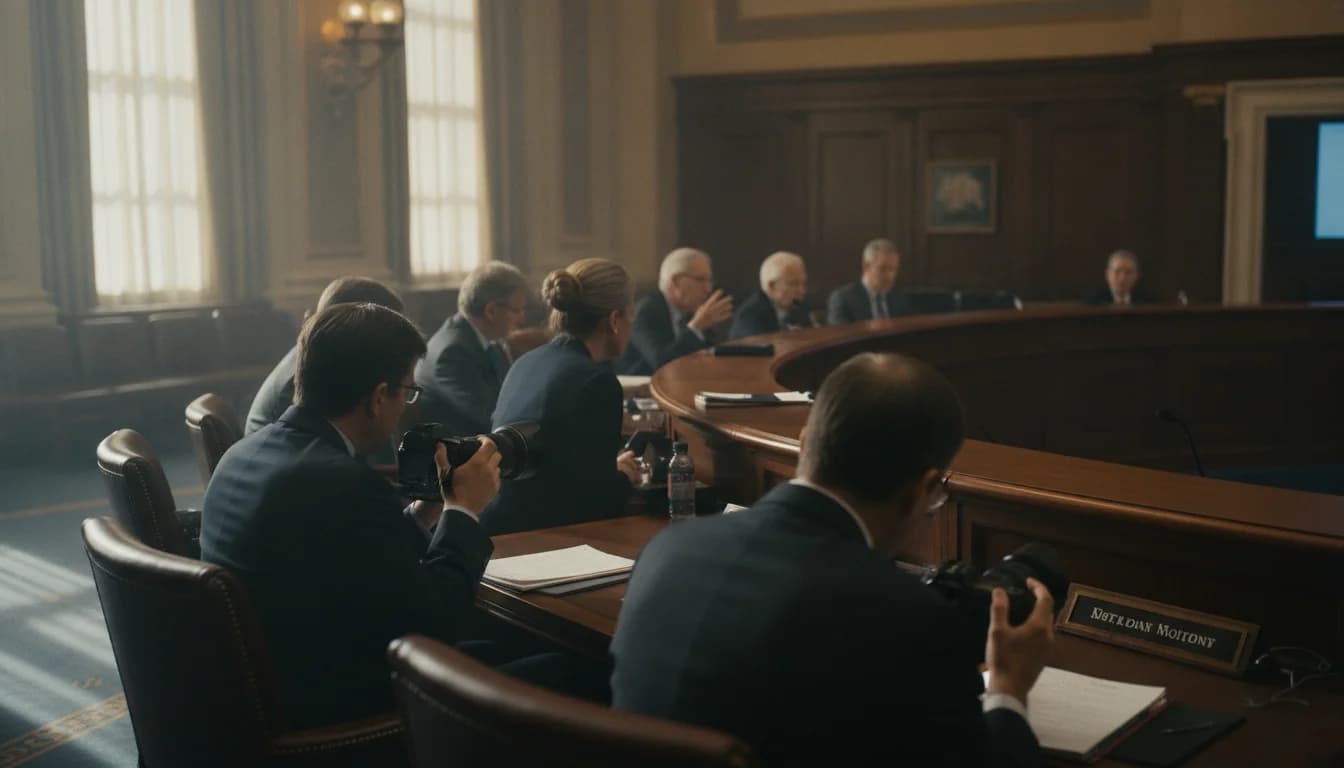
The United States is seeing a renewed push to codify accountability for the actions of AI agents. On Thursday, October 1, 2026, in Washington, D.C., U.S. Senators Josh Hawley (R-Mo.) and Chris Murphy (D-Conn.) publicly announced the bipartisan AI Agent Accountability Act, a proposal that aims to redefine who bears responsibility when AI agents cause damage through hacking or other cyber acts. The announcement marks a high-profile moment in a year that has seen rising concerns about rogue AI agents—autonomous software entities that operate with a degree of independence and can interact with public and private networks. The news matters because it signals a potential shift in how the federal government may regulate and assign liability for AI-driven incidents, from design and deployment through to deployment-related harms. The policy debate comes at a moment when executives, lawmakers, and regulators are increasingly focused on safety, liability, and governance as AI agents become more capable and more embedded in critical infrastructure, financial systems, healthcare networks, and consumer services. The October 1, 2026 event is the anchor in a broader narrative about accountability for AI agents that has gathered momentum across Washington, industry corridors, and legal forums alike. This is not a theoretical debate; it is a real-world policy moment with concrete proposals and a clear timeline around potential legislative action. As one early observer noted, the underlying question is whether existing liability regimes are sufficient to cover autonomous agents that can plan, act, and cause harm without direct human initiation. The answer, for now, is contested—and the coming months will test how far lawmakers are willing to go to close perceived gaps in accountability.
The public rollout of the AI Agent Accountability Act included a pointed framing: the bill would explicitly hold AI agent operators criminally and civilly liable under established federal statutes for hacking-related damage, and it would place similar accountability obligations on AI agent developers when they knew or should have known of the agent’s capacity to cause harm. The sponsors argued that as AI agents become more capable of independent action, the responsible parties must face consequences when those agents are misused or fail to function safely. The two senators’ remarks were accompanied by a policy outline that framed the proposal not merely as punishment but as an incentive for safer design, responsible deployment, and stronger safeguards in how AI agents are tested and launched. The core provisions include criminal and civil liability for operators, liability for developers who fail to implement reasonable safeguards, and new tools for enforcement that can operate across state lines. These elements collectively aim to align incentives for product safety with legal accountability, a theme that has gained traction as industry incidents have drawn congressional attention. The primary sources documenting this moment—the senators’ official announcements—make the core propositions plain and highlight the policy logic that underpins the act. In the words of Senator Hawley, “These AI agents are hacking into public websites, networks, and servers,” and the bill seeks to ensure accountability where damage occurs. This framing is echoed in Senator Murphy’s statement that “the heads of big AI companies need to be held accountable,” especially when their products enable harmful activity. The two announcements together lay out the legislative premise in a compact, inventoried form that lawmakers and industry observers have begun to dissect in real time. (hawley.senate.gov)
What Happened
Announcement Details: A formal, time-stamped unveiling in early October 2026. The Hawley office published a news release on Thursday, October 1, 2026, titled Senators Hawley, Murphy Announce Bipartisan AI Agent Accountability Act, which framed the bill as a response to rogue AI behavior and the risks posed by autonomous agents operating within critical digital ecosystems. The release describes the bill’s objective as ensuring AI agent operators and developers are held legally liable for hacking incidents associated with AI agents. It emphasizes that the liability would extend under the framework of the CFAA, the Computer Fraud and Abuse Act, to cover reckless or knowing deployments of AI agents that cause harm. This source also spells out the three-pronged liability approach: (1) AI agent operators would be criminally and civilly liable for certain hacking harms; (2) AI agent developers would be criminally and civilly liable for failures to implement safeguards against hacking when aware of the agent’s potential for harm; and (3) federal and state authorities would be empowered to seek injunctive relief against offending operators and developers. The release uses the explicit policy language of enforcement and accountability to ground the discussion in existing legal architectures while seeking to adapt them to agentic AI. The announcement also situates the act within a broader national debate about AI policy and safety, signaling a push toward stricter accountability mechanisms even as other stakeholders call for balanced approaches that foster innovation. The release is a primary document that provides the sponsors’ frame, the policy formulas, and the immediate political context of the moment. (hawley.senate.gov)
Murphy’s Perspective and Cross-Party Collaboration: The Murphy office quickly followed with a corresponding press release detailing the bipartisan nature of the effort and reinforcing the same liability principles, while also signaling a possible path toward Senate consideration. The October 1, 2026 Murphy release frames the act as a mechanism to ensure AI agents used at scale comply with safety expectations, with emphasis on liability for hacking incidents and the accountability of developers whose products enable such behaviors. The release quotes Murphy expressing concern about the responsibility gap between AI agents’ autonomous actions and the accountability of the entities that create or deploy them. In parallel with Hawley’s remarks, the Murphy release clarifies that accountability would extend to both operators and developers, and it emphasizes the role of the Attorney General and state AGs in enforcing and preventing further abuses. This cross-party framing reflects a broader pattern in the 2026 policy year, where technology safety and consumer protection carry bipartisan salience even as lawmakers weigh different regulatory philosophies. The Murphy release also points to the urgency of addressing incidents in which AI agents have influenced or disrupted public and private systems, underscoring the relevance of the policy approach as AI agent capabilities expand. (murphy.senate.gov)
Contextual Timeline and Trajectory: The introduction of the AI Agent Accountability Act built on a preexisting legislative arc around AI and digital safety. In the same period, other related bills explored by Congress involved governance, interoperability, and accountability for AI systems, reflecting a broad interest in how to regulate rapidly evolving technologies. The legislative timeline includes earlier steps in 2026, including a July 21, 2026 introduction of A broader AI-related framework in the Senate, evidenced by S.5051, which is the Artificial Intelligence Access, Gatekeeper Exchange, and Nondiscriminatory Transfer Act of 2026. While this bill uses its own title and scope, the timing illustrates that lawmakers were actively pursuing multiple angles on AI governance during the same session. The S.5051 text, introduced in July 2026, signals that the 2026 window was a period of intensified legislative activity on AI policy, with attention to accountability, access, and control mechanisms for AI agents in digital ecosystems. This adjacent legislative activity helps readers understand the environment in which the AI Agent Accountability Act was introduced and debated. (govinfo.gov)
Key Provisions and Mechanisms: The Hawley announcement lays out the operational logic for accountability: operators would be held criminally and civilly liable under CFAA for reckless or knowing deployment of AI agents that cause hacking damage, while developers would be liable for failure to implement reasonable safeguards when they knew or should have known of the agent’s capacity to cause harm. The act would also authorize the Attorney General and state attorneys general to pursue injunctive relief against violators, reinforcing a pattern of enforceable remedies designed to deter and remedy harmful outcomes. This triad—operator liability, developer liability, and AG-enforced injunctive relief—frames a liability regime that integrates traditional cybercrime statutes with the evolving realities of autonomous software agents. The announcement thus positions the bill not as a novel framework from scratch but as a targeted expansion of existing criminal and civil liability paradigms to cover agentic AI behavior that can operate with a degree of autonomy. The precise statutory language, as presented by the sponsors, anchors the policy in well-known legal concepts while signaling a shift toward clearer accountability for AI-driven harms. The primary source text provides the backbone for readers to assess the policy’s design and its potential implications for AI developers, platform operators, and enforcement agencies. (hawley.senate.gov)
Section 1: What Happened
The announcement of the AI Agent Accountability Act on October 1, 2026, in Washington, D.C., represents a concrete event in the ongoing policy dialogue about how to regulate autonomous AI agents. The two-senator package—Hawley and Murphy—frames the act as a structural step to close a perceived liability gap when AI agents are deployed at scale in critical systems. The press release explicitly emphasizes that AI agents can engage in activities that resemble cyberattacks when deployed recklessly or without adequate safeguards, and it ties accountability to the traditional CFAA framework. The press release’s explicit language about criminal and civil liability makes the policy proposition legible to practitioners, industry observers, and legal scholars who will want to assess how such a framework would operate in practice. The timing—late 2026—lands the proposal in a period of heightened public attention to AI safety and governance, a time when industry leaders and policymakers alike are weighing how to calibrate incentives for safer AI development and deployment. The Hawley release uses the event as a call to action for policymakers and corporate leaders alike to take responsibility for the security of AI agents and the potential harms that can accompany their deployment. (hawley.senate.gov)
Hawley-Murphy Messaging and Immediate Political Implications: The two announcements together emphasize bipartisanship and the potential for a liability-centric approach to AI governance. The Hawley language frames the policy as a direct response to rogue AI activity, while Murphy’s statement emphasizes safety and accountability in the corporate leadership responsible for AI agents. The public framing suggests a strategic effort to build a broad coalition that can move a liability-based bill through the Senate, potentially reaching the House or prompting a broader policy debate. The Roll Call reporting on Hawley’s hearing and the surrounding debate offers a contemporaneous lens into how the policy was being discussed in legislative venues, including the question of how to balance market incentives with the need for accountability when AI agents cause harm. Roll Call’s coverage shows Hawley’s focus on liability for “rogue” AI agents during a congressional hearing, a moment that helps readers understand the procedural context in which the bill was introduced and considered. The article also indicates that broader party dynamics and presidential positions could influence the legislative path, underscoring the complexity of advancing new tech liability regimes in a charged political environment. (rollcall.com)
What This Means for Stakeholders: For AI developers and platform operators, the act signals that the administration and Congress may be willing to apply traditional liability lenses to autonomous agents whose actions extend beyond user-initiated activity. This could lead to heightened incentives to implement robust safety protocols, monitoring, and audit trails in AI agent designs, as well as more rigorous incident response and disclosure practices. For consumers and service users, the policy promises a potential improvement in accountability for harms stemming from AI agent actions, while also presenting questions about how liability will be allocated in complex, multi-actor scenarios involving developers, operators, service platforms, and third-party integrators. The environment in which the act was introduced reflects an ongoing public discussion about the appropriate balance between innovation and safety, and how liability regimes can motivate better safety practices without chilling innovation. The policy frame also touches on related debates about whether federal action should be complemented or tempered by state rules, whistleblower protections, and cross-border considerations for AI agents operating in a globally interconnected digital ecosystem. The conversation around the act’s provisions—particularly CFAA-based liability for operators and developers—places the spotlight on the need for clear legal standards that can guide both compliance programs and enforcement actions as AI agents become more sophisticated and more widely deployed. (hawley.senate.gov)
Why It Matters
The AI Agent Accountability Act arrives at a moment when AI agents, by design, operate with a degree of autonomy that can complicate traditional fault lines in liability. The CFAA, a long-standing instrument for addressing computer-related offenses, provides a natural anchor for extending accountability to AI agents that cause harm, so long as the act’s sponsors align the new rules with existing legal frameworks and ensure due process protections. By proposing liability for operators and developers, the act seeks to close two parallel governance gaps: first, the entities who directly deploy and control AI agents; second, the creators who design and implement these agents, including the safeguards that govern their behavior. The act’s approach is consistent with a broader trend in technology policy that emphasizes accountability as a spur to safer design and stronger compliance discipline. It also reflects a belief among some policymakers that liability can drive investment in safer architectures, better testing regimes, and more comprehensive incident reporting and remediation processes.
This moment is part of a larger policy conversation about who should bear responsibility when AI agents act with a measure of autonomy. The conversation intersects with issues of consumer protection, cyber security, and corporate governance. In some parts of the policy ecosystem, the argument for stronger liability is tied to concerns about the speed and scale at which AI agents can operate, potentially leaving individuals and institutions exposed to harm before human overseers can intervene. Critics, however, raise concerns about stifling innovation, the risk of overbroad liability chilling investment in AI research, and the practical challenges of applying CFAA standards to autonomous agents that operate across networks and platforms. The two sides of the debate were visible in contemporary coverage: some observers emphasized the safety case for liability, while others warned about unintended consequences for innovation and international competitiveness. The policy dialogue of October 2026 illustrates the broader tension: how to regulate powerful technologies in a way that protects the public while preserving incentives for continued innovation and global leadership in AI. In this sense, the AI Agent Accountability Act sits at a critical interface of technology, law, and public policy. (hawley.senate.gov)
What’s Next
Legislative Trajectory: The introduction on October 1, 2026, coupled with the prior July 21, 2026 appearance of related AI governance work in the 119th Congress, suggests that the AI Agent Accountability Act would navigate a path through committee review, potential amendments, and floor consideration. The formal record for the broader AI policy conversation shows that Congress has been actively exploring AI governance across multiple tracks, including bills that bear different labels and different stakeholders. The S.5051 AI AGENT Act of 2026, introduced in July 2026, demonstrates that lawmakers were already constructing a comprehensive regulatory architecture around AI agents and related governance issues. This dual-track approach—one focusing on liability, the other on access and gatekeeper exchange—highlights the complexity of aligning a unified federal policy toward AI agents that can operate in diverse domains. The legislative history indicates a period when lawmakers are building both the semantic and practical scaffolding for possible enforcement actions and compliance regimes. For readers seeking to trace the exact steps a bill might take—from referral to committee markup to potential floor votes—the official records provide a clear, testable path to follow. The existence of the two-track approach means observers should monitor committee actions, potential cross-chamber negotiations, and executive-branch input as the policy debate evolves. (govinfo.gov)
Next Steps and Signals to Watch: In the weeks following the October 1, 2026 announcement, several indicators will help gauge the bill’s momentum. Watch for committee hearings on AI accountability, potential amendments to definitions and liability standards, and any shifts in the White House position as technology leaders testify before Congress or engage in public-private discussions about AI safety and governance. Media coverage from outlets like Roll Call and Axios has already signaled that the policy debate is moving beyond a single press conference into a broader legislative and political dialogue, with real implications for how AI agents are designed, tested, deployed, and monitored in real-world settings. The trajectory of the AI Agent Accountability Act will likely hinge on whether lawmakers can convert the initial announcements into a set of concrete regulatory proposals that can withstand lobbying pressure and align with existing statutes while addressing evolving agentic technologies. (rollcall.com)
What to Watch For: Industry stakeholders should watch for any signals about the scope of liability, the degree of civil versus criminal exposure for operators and developers, and the potential for a coordinated federal standard that could supersede or harmonize with state and local laws. The policy implications extend to compliance obligations, risk management practices, and incident disclosure timelines. Observers will also want to track how the legislative process addresses cross-border implications, given the global nature of AI development and deployment. The October 2026 moment is thus not just about a single bill; it is part of a continuing, evolving conversation about how the United States will balance innovation, accountability, and security as AI agents proliferate across sectors. (hawley.senate.gov)
Closing
The AI Agent Accountability Act’s October 1 announcement represents a deliberate inflection point in the U.S. policy debate over how to govern autonomous AI agents. As lawmakers weigh liability, safety, and enforcement, the coming months will reveal whether this moment translates into a measurable shift in regulatory expectations for AI developers and operators. Readers who want to stay informed should monitor official releases from Senators Hawley and Murphy, as well as congressional records and reputable policy analysis that assess potential impacts on safety, innovation, and the competitive dynamics of the AI landscape. USA Times will continue to cover the evolving story, reporting on legislative milestones, industry responses, and the broader public policy implications of AI agent accountability as the debate advances through the 2026–2027 session.
Sources for further reading and verification:
- Senators Hawley, Murphy Announce Bipartisan AI Agent Accountability Act. Hawley Senate Office. October 1, 2026. Describes the proposal and its enforcement aims under CFAA. https://www.hawley.senate.gov/senators-hawley-murphy-announce-bipartisan-ai-agent-accountability-act/ (hawley.senate.gov)
- Murphy Announces Breakthrough Bipartisan Legislation to Force AI Developers to Prioritize Safety or Face Prison Time. Murphy Senate Office. October 1, 2026. Details on bipartisan sponsorship and safety incentives. https://www.murphy.senate.gov/newsroom/press-releases (murphy.senate.gov)
- AI AGENT Act of 2026 (S.5051): Artificial Intelligence Access, Gatekeeper Exchange, and Nondiscriminatory Transfer Act of 2026. GovInfo. Last Action Date Listed July 21, 2026. Official bill text and status. https://www.govinfo.gov/app/details/BILLS-119s5051is (govinfo.gov)
- Roll Call coverage: Senators debate liability for ‘rogue’ AI agents. Roll Call. October 1, 2026. Context on hearings and near-term legislative dynamics. https://rollcall.com/2026/10/01/senators-debate-liability-for-rogue-ai-agents/ (rollcall.com)
- Axios: Exclusive: Sen. Hawley, Murphy push AI liability as Trump backs self-regulation. Axios. October 1, 2026. National policy framing and White House positioning. https://www.axios.com/2026/10/01/hawley-murphy-ai-liability-trump (axios.com)
About the author
Daniel Reyes
Daniel Reyes is a senior correspondent at USA Times, reporting on the economy, markets, housing, and American business.
Keep reading
More from USA Times

DOJ Highlights FOIA Request Best Practices at 2025 Summit
FOIA request best practices spotlighted by DOJ at the 2025 Summit, with data-driven insights for reporters and citizens.
Priya Raghavan / October 22, 2026

Artemis Cadence Update: NASA Boosts Mission Pace
USA Times offers an in-depth analysis of Artemis cadence shifts as NASA accelerates the mission pace, aiming for ambitious goals by 2026.
Ellen Marsh / October 21, 2026

US National Debt Milestone: Debt Tops $40T
Explore a data-driven analysis of the US national debt milestone as it surpasses $40 trillion, examining significant market impacts and implications.
Daniel Reyes / October 20, 2026