News
Supreme Court Rules on Geofence Warrants in Chatrie Case
The Supreme Court's Chatrie v United States ruling establishes that geofence data collection is a Fourth Amendment search, outlining a protocol for…
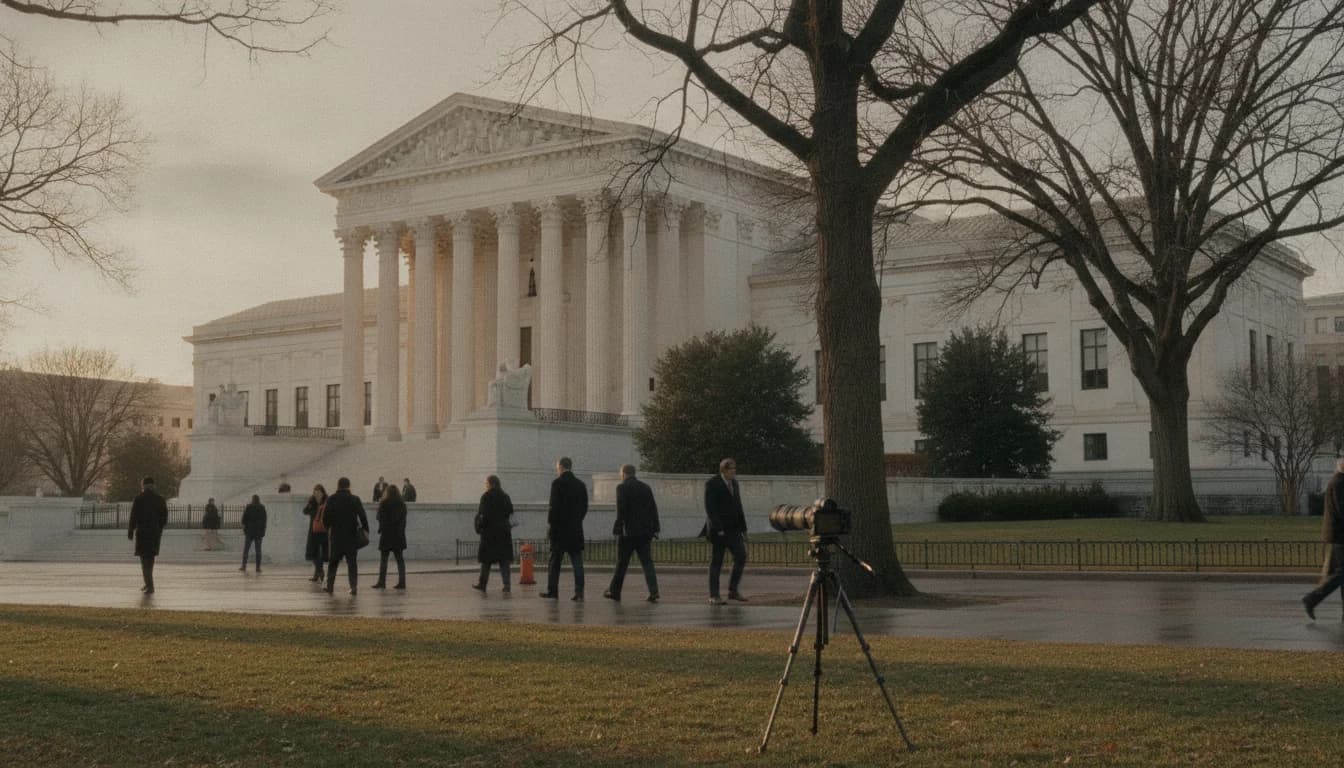
Chatrie v United States geofence warrants privacy ruling, issued June 29, 2026, by the Supreme Court, holds that geofence data collection constitutes a Fourth Amendment search and outlines a data-narrowing sequence from 19 anonymized users to 3 identified. This pivotal decision marks a clear boundary in how location-history data may be used in criminal investigations, and it positions privacy protections at the forefront of technology-enabled policing. As USA Times reports, the ruling arrives at a moment when geofence warrants have become a common tool for investigators and a focal point for privacy advocates. The opinion’s details, including a three-step data-handling protocol and the narrowing of data from anonymized to identified individuals, offer a new frame for how courts balance public safety needs against individual privacy rights. The case, officially docketed as 25-112, sits at the intersection of Fourth Amendment doctrine, the Carpenter lineage, and the evolving role of data brokers in modern policing. For readers seeking the primary source material, the Supreme Court’s decision and the associated docket are linked here: the official PDF of the opinion and the court’s docket page.
The impact of this decision is already rippling through criminal defense perspectives, prosecutorial strategies, and tech policy discussions. Privacy advocates say the ruling reinforces a constitutional floor for data collection practices tied to geofence warrants, potentially constraining multi-step data pipelines that expand from anonymized location data to named individuals. Law enforcement officials, while acknowledging the ruling, point to ongoing needs for efficient investigative tools and the practical realities of solving violent-crime cases where timely data can be pivotal. Tech platforms that participate in geofence workflows—most prominently Google in the canonical geofence process—now face clarified boundaries about when their data can be turned over and how much of it can be shared at each stage. This coverage distills what happened, why it matters, and what to watch for next, with primary-source material attached for readers and researchers who want to trace the legal reasoning and the procedural steps laid out by the Court.
Section 1 — What Happened
The ruling and its central holding
The Supreme Court’s decision in Chatrie v United States geofence warrants privacy ruling confirms that the government’s access to location data gathered through geofence warrants implicates the Fourth Amendment’s protections against unreasonable searches. The Court’s majority holds that taking location-history data from a device, even if the user’s data travels through a third-party service, can constitute a search under Katz and Carpenter lineage when applied to the investigative process. The opinion, released on June 29, 2026, describes how law enforcement agencies have used a three-step protocol with Google’s Location History data to triangulate suspects while gradually narrowing a broad dataset to a focused set of individuals. This ruling does not categorically ban geofence warrants but imposes constitutional constraints on how such data may be obtained and used. For precise language and the Court’s reasoning, consult the official opinion: “Chatrie v. United States” (PDF) and the court’s docket page. [Primary sources: Supreme Court opinion (PDF); Docket for 25-112]
The data-handling workflow under scrutiny
The Court’s analysis details a three-step process that Google reportedly employs when handling geofence warrants. First, anonymized location data for all devices within the geofence is produced for a defined time window. Second, investigators narrow the dataset to a subset for additional review, extending the time window and broadening the geographic envelope. Third, a further subset is matched with identifying information such that names and contact details are produced for the final, targeted individuals. The Court presents this workflow to explain how large, seemingly anonymous datasets can gradually reveal concrete individuals and what constitutional checks apply at each stage. The majority’s framing underscores the privacy implications inherent in geofence data, even when the data is presented initially without identifiers. The Court’s description aligns with the examples and procedural steps previously described by Google and the government in the record. For the exact description and stage-by-stage mechanics, see the opinion (PDF) and the docket entry. [Primary sources: Supreme Court opinion (PDF); Docket for 25-112]
The real-world timeline leading to the ruling
Chatrie’s case originated from a 2019 bank-robbery investigation in Virginia, where police sought location-history data through a geofence warrant. The issuing magistrate approved the geofence, Google supplied anonymized data in stages, and a final subset of individuals was identified, including Chatrie, who was charged with robbery and firearms offenses. The district court and the Fourth Circuit examined whether the warrant violated the Fourth Amendment and how the good-faith exception applied to the particular case. The Supreme Court granted certiorari on January 16, 2026, and the decision was issued on June 29, 2026. The docket summarizes these steps and the Court’s ultimate ruling. For the official docket history and the opinion, see the Supreme Court’s docket page and the posted PDF of the slip opinion. [Primary sources: Docket for 25-112; Supreme Court opinion (PDF)]
Section 2 — Why It Matters
Privacy protections and the Carpenter lineage
The ruling anchors a renewed emphasis on individual privacy in the context of geofence warrants, a technology-assisted investigative tool that relies on location data. The Court’s reasoning connects to Carpenter v. United States by reaffirming that people have a reasonable expectation of privacy in their location information, even when data is held by a third party. The Court emphasizes that the dynamic, multi-step geofence process can result in a broad initial capture of data and that constitutional protections should govern such processes, particularly when they affect the privacy of people not accused of wrongdoing. This development matters not only to criminal cases like Chatrie but also to how courts will assess other location-data technologies (such as CSLI and related analytics) in the future. The official opinion provides the constitutional framework and basis for applying these protections to geofence warrants. [Primary sources: Supreme Court opinion (PDF); Docket for 25-112]
Implications for law enforcement and technology platforms
The decision clarifies that data-handling practices at the intersection of geofence warrants and location data must be consistent with Fourth Amendment protections. Law enforcement agencies will need to articulate with greater precision why geofence data is necessary, how the time window is constrained, and how the data is narrowed before seeking identifying information. Platforms that routinely provide anonymized location data in response to warrants face a heightened sensitivity around data minimization, retention timelines, and the scope of information shared with investigators. While the opinion does not outlaw geofence warrants outright, it imposes a constitutional lens on the process, potentially slowing some investigative workflows or prompting tighter internal protocols within technology providers and law-enforcement collaborations. This has direct implications for the market of geofence-related services and the broader field of digital-privacy compliance. [Primary sources: Docket page; Opinion (PDF)]
Broader policy and public-interest context
Beyond the courtroom, the Chatrie ruling intensifies ongoing debates about privacy, data ownership, and the role of data brokers in public safety. Privacy advocates have long warned that geofence data can sweep in large swaths of innocent bystanders, raising concerns about overbreadth and civil liberties. The ruling provides a clear constitutional framework that may influence state and federal privacy initiatives and inform corporate and legislative risk assessments. Policymakers are now balancing the benefits of rapid, data-driven investigations against the potential harms of overbroad surveillance and the chilling effects of location-tracking across the population. Industry analyses point to potential shifts in how geofence-related workflows are designed, with an emphasis on tighter testable constraints, defined minimization standards, and enhanced transparency around data-sharing practices. [Primary sources: AP News coverage; Privacy-focused analyses]
Stakeholder perspectives and early reactions
- Privacy advocates point to a strengthened Fourth Amendment barrier against overbroad data collection in geofence contexts, arguing that the decision protects everyday users whose data may be captured incidentally. ACLU and allied groups have historically argued for stricter limits on geofence warrants, and the Court’s decision is seen by some as a meaningful checkpoint in the evolving privacy landscape. [Reference: Privacy organizations’ statements and context in public reporting]
- Law-enforcement stakeholders express cautious pragmatism, noting that geofence warrants can be powerful tools when narrow, time-bound, and well-justified. They emphasize that the ruling does not eliminate geofence warrants but requires careful structuring of data collection and a rigorous review process to ensure constitutional compliance. [Reference: Public reporting on law-enforcement perspectives]
- Tech platforms in the geofence ecosystem are paying close attention to the ruling’s implications for data minimization, time windows, and the potential need for enhanced user-consent or notification mechanisms as part of responsible data-sharing practices. [Reference: Industry coverage and official court materials]
Section 3 — What’s Next
Next steps for courts, lawmakers, and practitioners
Following a major Supreme Court ruling, lower courts will interpret and apply the decision in subsequent cases involving geofence data and similar privacy-centric data streams. Expect additional challenges and refinements as courts articulate what constitutes a compliant geofence warrant in new factual settings, including different crime types and varied geofence geometries. Lawmakers may also consider privacy statutes and updates to clarify acceptable practices for data brokers and platform providers in investigative contexts. The SCOTUS docket and related opinions will continue to guide these developments, with appellate courts potentially issuing clarifying rulings as cases come through the pipeline. [Primary sources: Docket page; Official opinion PDF]
What to watch for in the near term
- New or refiled cases testing the perimeters of the Court’s decision, particularly in circuits outside the Fourth Circuit, which may interpret the decision through different statutory and constitutional lenses.
- Legislative or regulatory activity around data minimization, incidental collection, and the transparency of geofence-related investigations, especially as state privacy laws evolve and as federal privacy discussions continue.
- Technical and operational changes in geofence workflows at major tech platforms and among law-enforcement agencies, including potential revisions to the three-step protocol described in the Court’s opinion and discussed in related public records. [Primary sources: Court materials; docket entries]
Closing
The Chatrie ruling places a concrete constitutional boundary around geofence warrants, reinforcing that the capture and examination of location data—even when mediated by third-party services—must pass Fourth Amendment scrutiny. As this decision filters through the legal system and into policing practices, readers should expect a period of interpretation, implementation, and potentially further legal challenges. The Court’s June 29, 2026 decision creates a reference point for both privacy advocates and investigative agencies as they navigate the balance between civil liberties and public safety in a data-rich era. To stay updated, follow official Supreme Court updates and docket activity, and monitor reputable court-reporting outlets for case-specific developments.
Sources and primary documents
- Supreme Court of the United States — 25-112 Chatrie v. United States (PDF of slip opinion): official opinion detailing the Court’s reasoning, the geofence-warrant workflow, and the data-narrowing sequence. Descriptive anchor: “Supreme Court slip opinion in Chatrie v. United States (25-112)” with the PDF link. [Link: https://www.supremecourt.gov/opinions/25pdf/25-112_0am4.pdf]
- Supreme Court of the United States — Docket for 25-112: official docket history, arguments, and related filings. Descriptive anchor: “Docket for 25-112” with the docket page link. [Link: https://www.supremecourt.gov/docket/docketfiles/html/public/25-112.html]
- Additional context and coverage from authoritative outlets summarizing the ruling and its implications, including coverage of the oral arguments and public reaction. Descriptive anchors: “SCOTUS oral argument audio” and “AP News coverage on geofence warrants” with links to official audio and AP’s reporting. [Audio: https://www.supremecourt.gov/oral_arguments/audio/2025/25-112; AP News: https://apnews.com/article/9d8a0b0bcfcbc0a0891676e0e0a5f0c6; AP News follow-up: https://apnews.com/article/c18a5c8057af941378bb13f994c750a1]
About the author
Priya Raghavan
Priya Raghavan covers American culture, science, and sport for USA Times.
Keep reading
More from USA Times

SURPASS ARPA-H Clinical Trials Program Launches
USA Times analyzes SURPASS ARPA-H clinical trials program launch and its potential to shorten drug development timelines.
Daniel Reyes / October 29, 2026

Hart-Scott-Rodino Targeted Merger Review Resumes
DOJ restarts the Hart-Scott-Rodino targeted merger review process, signaling a shift towards faster and leaner investigation methods.
Daniel Reyes / October 28, 2026

Bank of America AML Penalties 2026: FinCEN, OCC Actions
Explore a data-driven analysis of Bank of America's 2026 AML penalties and regulatory actions by FinCEN and OCC shaping future AML compliance.
Ellen Marsh / October 27, 2026